

Cannabis Advertising for Dispensaries, Brands & Multi-State Operators
Cannabis advertising is possible with the right channels, targeting, and compliance expertise. MediaJel reaches verified, legal-age consumers across programmatic display, CTV, digital out-of-home, native, video, and SEM with transparent measurement from impression to purchase.
Talk to A Strategist!Why Cannabis Advertising Is Different
Cannabis advertising is allowed, but it operates under stricter rules than most categories.
Fewer Channels, Stricter Requirements
Not every platform permits cannabis advertising, and requirements vary by state, channel, and campaign type. Campaigns must reach legal-age audiences and comply with rules governing placement, messaging, and required disclaimers.
The Rules Change State by State
What is permitted in one state may be prohibited in another. Explore our Cannabis Advertising Regulations Guide for rules by channel and state.
How MediaJel Helps You Stay Compliant
MediaJel helps cannabis businesses navigate these restrictions, avoid wasted spend, and advertise across inventory cleared for the category. If you are new to the space, you can also learn the fundamentals of cannabis advertising.
U.S. legal cannabis sales are projected to reach roughly $53.78bn in 2026, according to Statista. Consumer demand is growing, but access to social advertising remains limited.
Cannabis Advertising Channels
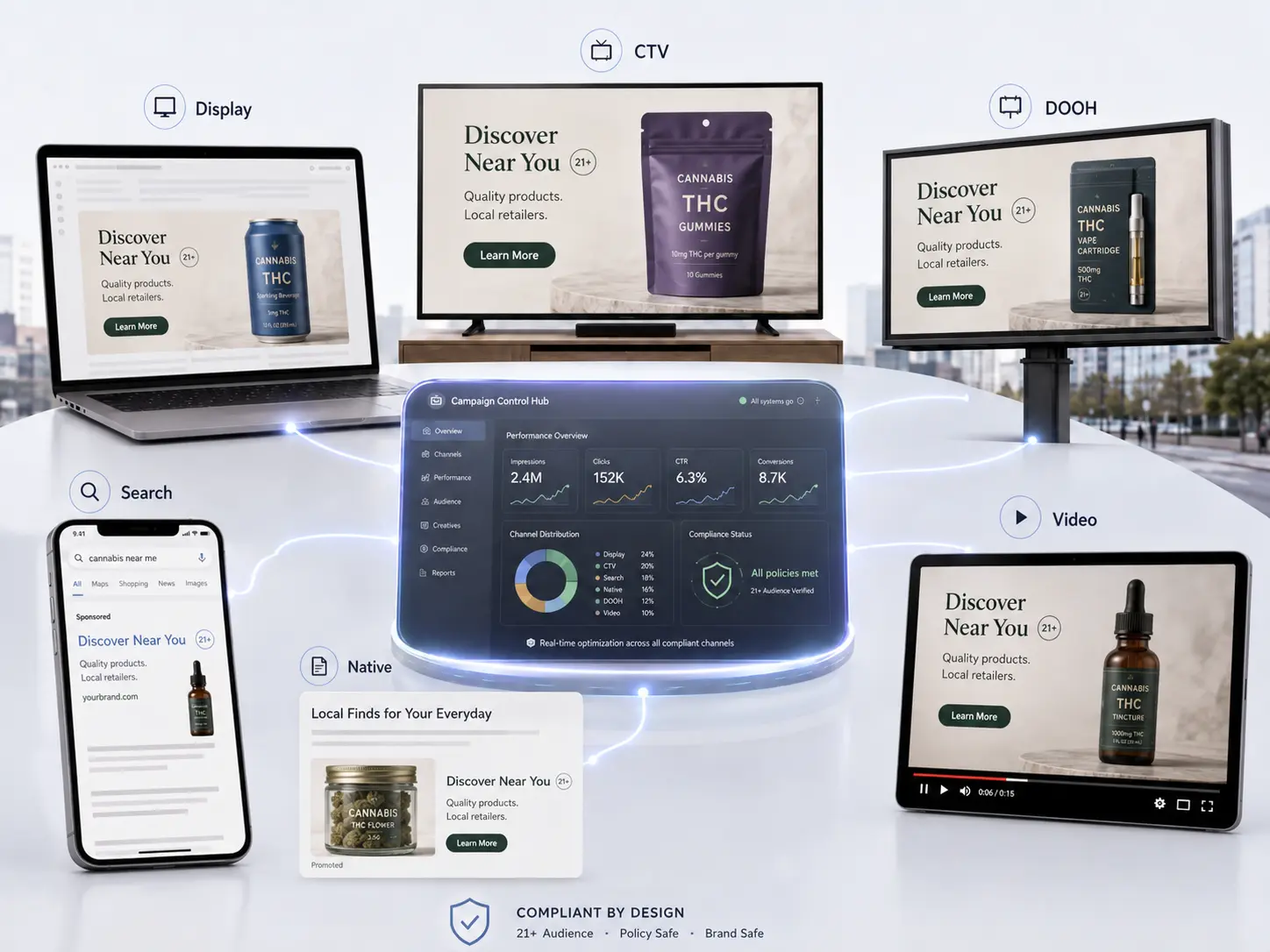
MediaJel runs six compliant paid channels on one platform. Programmatic and paid search drive lower-funnel action; CTV, video, and DOOH build the awareness that makes those channels convert; native bridges the two.
Programmatic Display
Access 175k+ compliant publishers, with first- and third-party audience targeting that reaches consumers most likely to buy. It’s the backbone of most cannabis media plans; scalable, measurable, and built to hit legal-age audiences.
Google Ads / Paid Search
MediaJel runs compliant cannabis SEM campaigns that capture high-intent demand the right way. CBD advertisers can run on Google through LegitScript certification and approved campaign structures, so accounts stay live.
Connected TV (CTV)
Age-verified streaming inventory like Tubi. CTV pairs the impact of television with the targeting and measurement of digital, so brand campaigns build awareness without wasting impressions on underage or out-of-market viewers.
Native Advertising
Native places your brand inside premium editorial, as sponsored articles and recommended content, where banner ads get ignored. It's paid distribution on cannabis-cleared inventory, so you're buying reach, not just publishing your own posts.
Digital Out-of-Home (DOOH)
Digital billboards and venue screens put your brand in the physical world, near dispensaries, along commuter routes, and in high-traffic bar, and restaurant venues. DOOH lets you buy placements by location and adjust on the fly.
Video Advertising
Pre-roll, instream or streaming video that tells your story with sight, sound, and motion, where compliant. Video drives brand recall and works hand in hand with CTV to cover both lean-back and on-the-go viewing.
Looking beyond paid media? Explore Cannabis SEO Marketing or, Cannabis Social Media Marketing as part of a full-funnel plan under our cannabis marketing hub.
How MediaJel Approaches
Cannabis Advertising
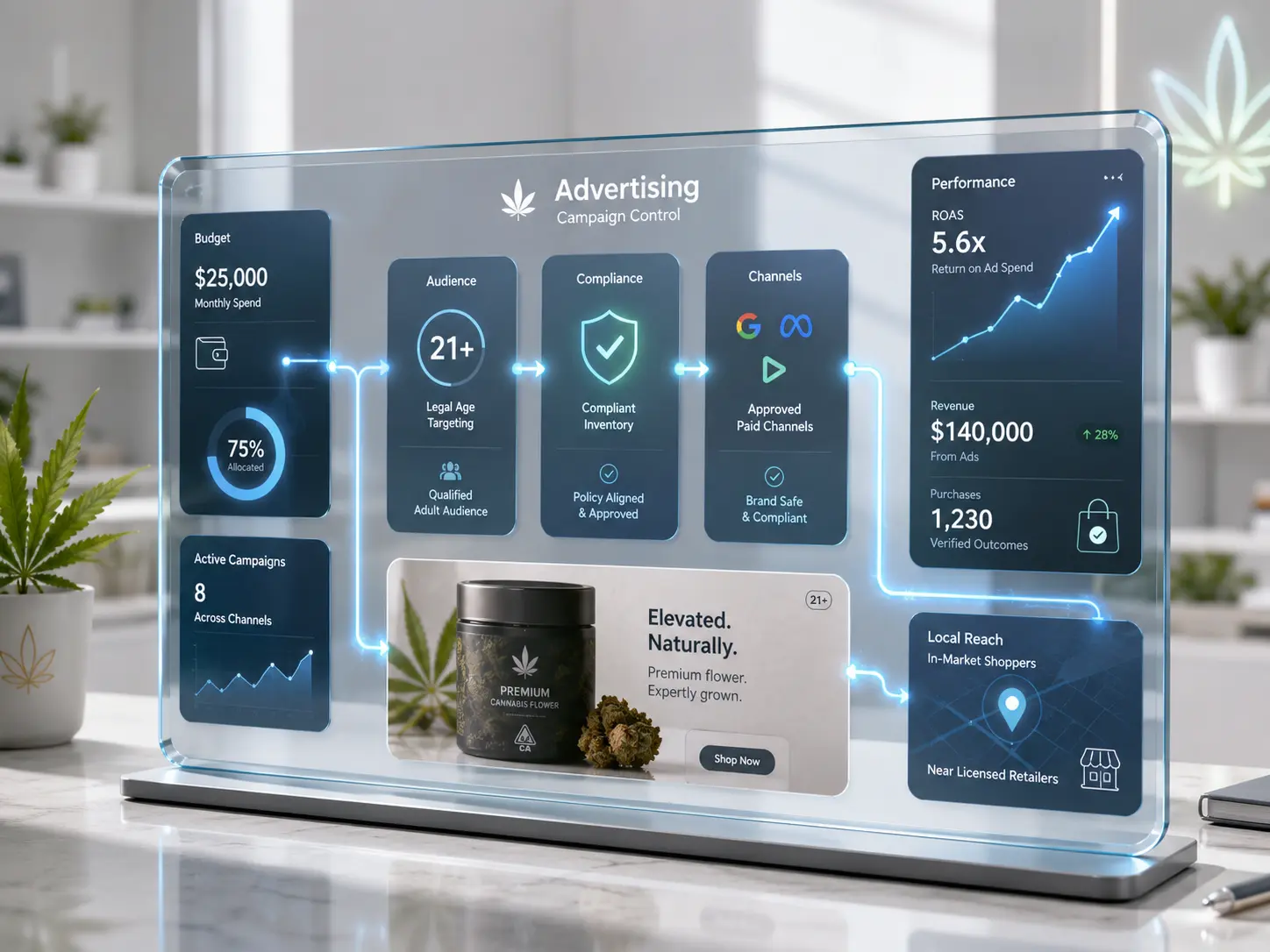
Our approach is built end-to-end for a regulated industry: one team, one plan, and one view of performance across channels.
Instead of stitching together disconnected vendors, you get one coordinated strategy where budget follows results and compliance is handled before anything goes live.
For brands and MSOs, that means engaging right-fit audiences and scaling across state lines without a compliance fire drill in every new market.
Define goals and build audiences.
Every plan starts with what you're trying to move: new customers, brand awareness, loyalty or market share. We build audiences from your first-party CRM data and layer in third-party cannabis-consumer segments through our DemoGraph data engine, so targeting starts with real buyers, not guesswork.
Deliver across channels on compliant inventory.
We activate your audiences across programmatic, CTV, DOOH, native, video, and paid search, buying only inventory that's cleared for cannabis and legal-age audiences. One platform means one media plan, not six disconnected vendors.
Map identity and measure what works.
Our identity graph connects impressions to households and, ultimately, sales. You see which channels, audiences, and creative are driving returns through the measurement and attribution reporting in your DataJel dashboard, then we optimize spend toward what's performing.
Keep it compliant and brand-safe.
Compliance isn't a checkbox at the end; it's built into targeting and placement. Every campaign meets strict brand-safety and LDA Compliance standards, so your budget reaches adults who can actually buy and your business stays protected.
Advertising vs. Organic:
How the Channels Work Together
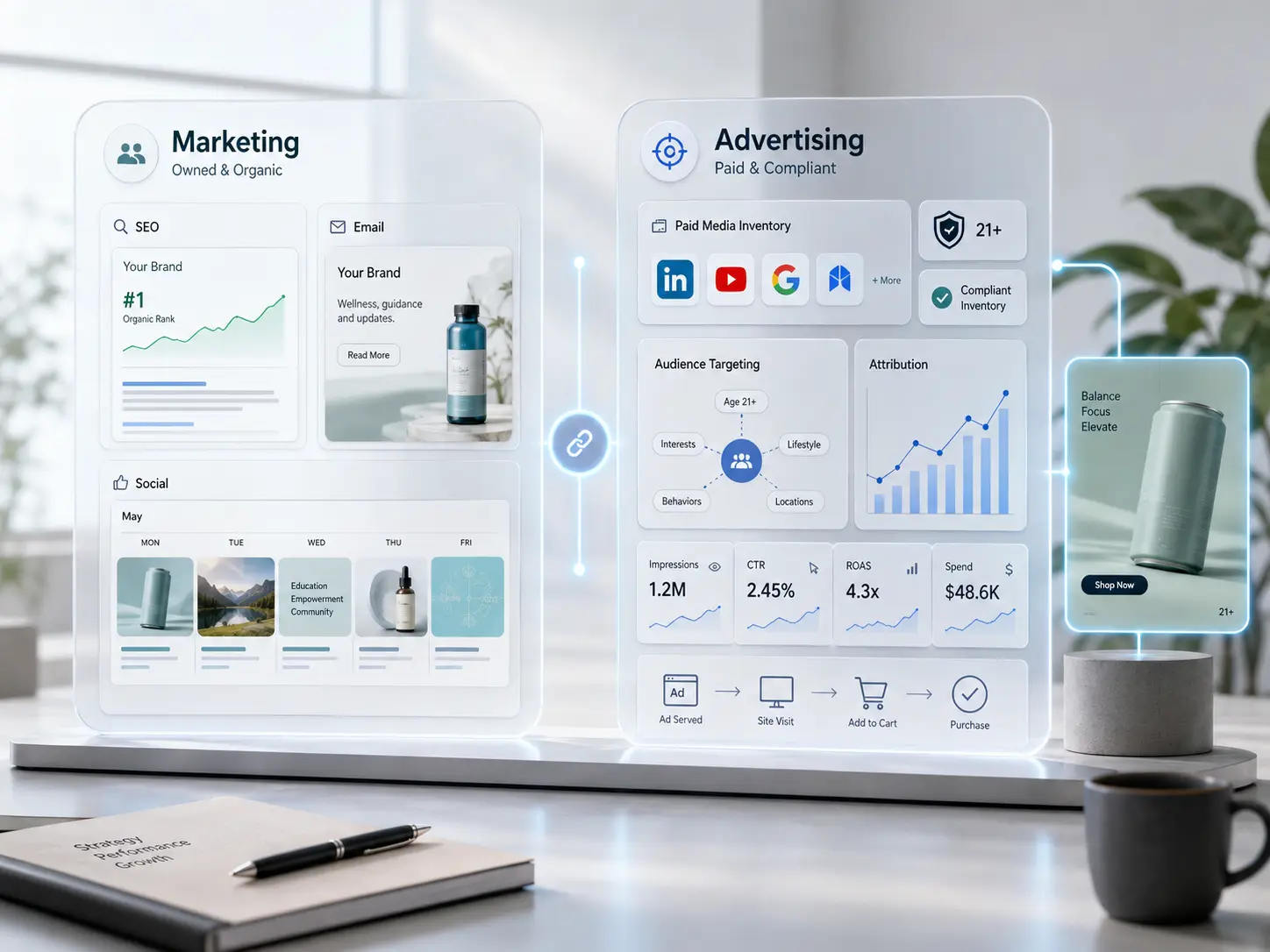
Paid creates demand. Organic captures it.
The strongest cannabis programs run both.
Cannabis Advertising (Paid)
Puts your brand in front of new audiences and drives them to act. Fills the top of the funnel and builds brand equity fast across CTV, DOOH, native, and video.
Cannabis SEO (Organic)
Converts people already searching for you. Compounds over time and lowers your cost to acquire the customers advertising introduced.
Common Cannabis Advertising Mistakes to Avoid
Running ads on non-compliant platforms.
Pushing direct cannabis ads through Meta gets accounts flagged, disapproved, or suspended, and puts your other campaigns at risk.
Skipping age-gating.
Failing to target the legal-age audience isn't just poor efficiency; in many states it's a compliance violation with real consequences.
Running with no attribution.
If you can't tie spend to store visits or sales, you can't tell what's working, and you'll keep funding channels that aren't.
Treating each channel in isolation.
Siloed campaigns waste budget and miss the compounding effect of a coordinated omni-channel plan.
Proven Results
Read Full Case Study Here >
Read Full Case Study Here >
Read Full Case Study Here >
Cannabis Advertising FAQs
Cannabis advertising promotes dispensaries, brands, and eligible products through paid media. It includes programmatic display, connected TV, digital out-of-home, paid search, native, and video. Learn more in our Cannabis Advertising Academy.
Yes, cannabis advertising is permitted in legal markets, but requirements vary by state. Regulations may govern audience age, ad placement, creative claims, and required disclaimers. Review our State-by-State Cannabis Advertising Laws Guide before launching a campaign.
Google restricts direct ads for recreational cannabis, but you're not locked out. MediaJel runs compliant paid search for cannabis, CBD, cannabis-adjacent businesses, and LegitScript-certified advertisers, and we know how to structure campaigns that capture high-intent demand and keep your accounts live. Explore MediaJel’s Cannabis Google Ads services.
Not directly. Meta (Facebook and Instagram) ban direct cannabis ads, as do YouTube, TikTok, and LinkedIn. Compliant paths exist for CBD and LegitScript-certified advertisers. Learn more about cannabis social media marketing.
Cannabis advertising refers specifically to paid media. Cannabis marketing also includes organic and owned channels such as SEO, social, content, email, and SMS. Advertising drives demand fast; organic marketing captures and compounds it. The strongest programs run both together.
Costs depend on the channel, market, audience, campaign objective, and geographic reach. Programmatic display and paid search can support focused campaigns, while CTV, DOOH, and video generally require greater investment to achieve meaningful reach.
Measurement depends on what you are advertising and the business outcome you want to achieve. MediaJel can track return on ad spend, incremental lift, customer acquisition cost, new versus returning or winback customers, churn, store visits, sales, impressions, and click-through rate with DataJel. This provides a clearer view of both campaign performance and its impact on customer growth.
See what compliant cannabis advertising can do for you.
Request a cannabis advertising audit of your brand, dispensary, or MSO. We’ll review your current channels, flag compliance gaps, and show you where the biggest opportunities are — no pressure, no obligation.