Most dispensaries are leaving revenue on the floor because their merchandising strategy is based on habit rather than intention. This webinar makes the case that great merchandising is one of the highest-impact things a cannabis retailer can do, and breaks down exactly what it takes to get it right.You'll learn the most common mistake killing dispensary sales, why aggressive discounting underperforms compared to experience-driven retention, and what modern cannabis merchandising actually means in practice. If you want your retail floor to inspire discovery and keep customers coming back, this session reframes how you think about your space.

100+ Cannabis Marketing Conversations
The lessons, mistakes, and growth strategies behind the industry’s most recognizable brands.
Browse Episodes

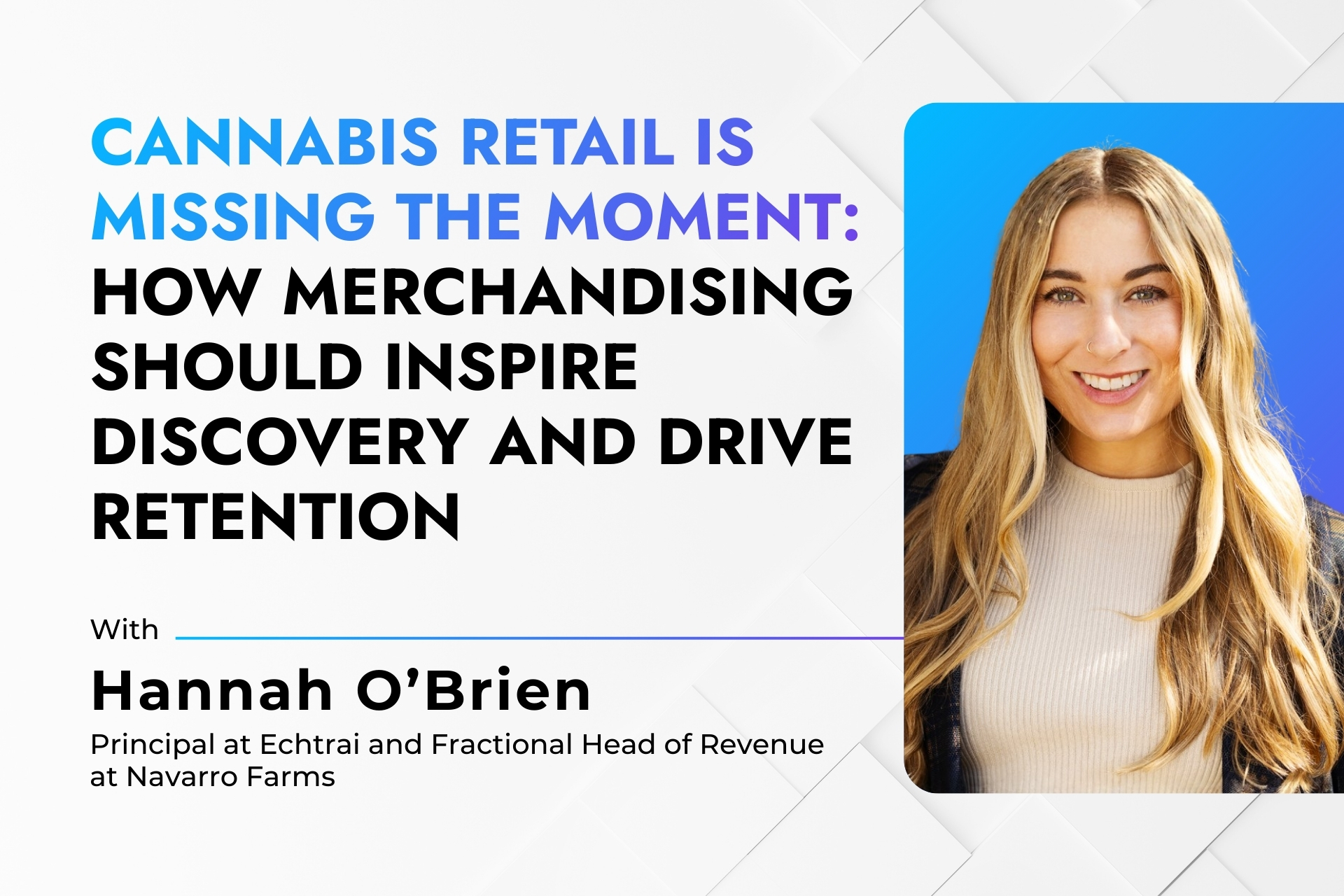
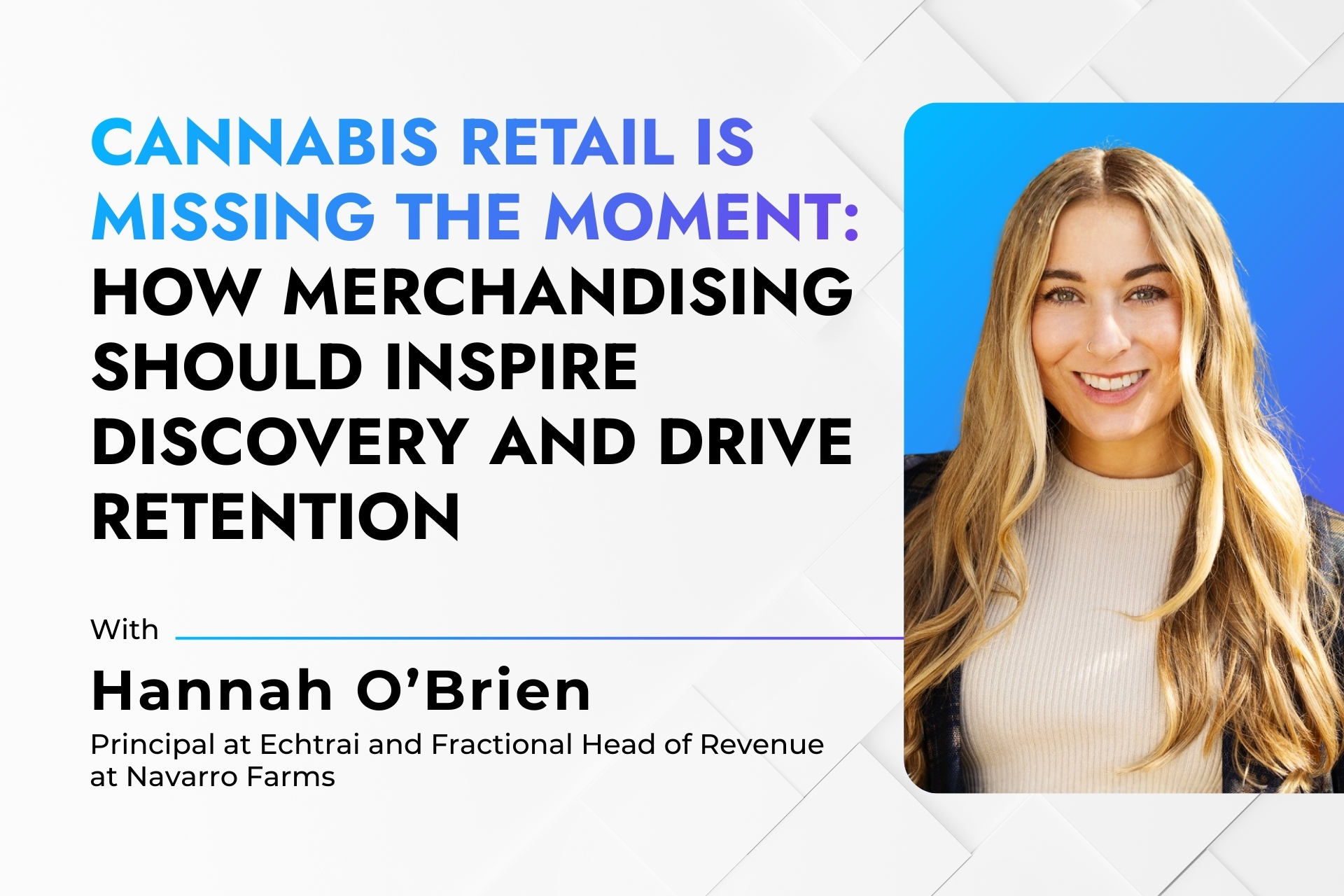
Cannabis Retail Is Missing the Moment: How Merchandising Should Inspire Discovery and Drive Retention

Watch Our FREE OnDemand Webinars
Just fill out this form and you are set to watch.
Key Insights
- Discounting at 40% destroys margin without building loyalty - targeted 15% promotions on specific SKUs drive velocity without training customers to wait for sales.
- Merchandising is not store design; it is the intentional arrangement of products, signage, and customer touch points to influence what people discover and decide to buy.
- Missouri dispensaries are winning by prioritizing the in-store experience over price competition - a model that shows what intentional retail strategy can produce in a maturing market.
- Bundling complementary products consistently increases average basket size without requiring a discount, as long as the pairing logic is grounded in how customers actually use the products together.
- Online menu merchandising follows the same logic as in-store: featured placement, category ordering, and suggested add-ons directly influence what customers add to their cart before they even walk through the door.
Expert Answers
[{What is the number one mistake dispensaries make that hurts sales?}
The biggest mistake is defaulting to discounting as the primary strategy for driving traffic and revenue. When dispensaries run 40% off promotions regularly, they train customers to wait for deals, erode brand equity with vendor partners, and destroy the margin that would otherwise fund growth. The underlying problem is that price has become a substitute for experience. When merchandising is intentional - when products are placed, presented, and contextualized in a way that drives discovery - customers make decisions based on value rather than price. Building that experience is harder than running a sale, but it produces more durable results.
{How do dispensaries increase basket size without relying on discounts?}
The most effective basket-building strategies involve proximity, pairing, and prompting. In-store, this means placing complementary products physically near each other so customers naturally consider them together - accessories near hardware, specific strains near relevant consumption formats. Digital menus replicate this logic with suggested add-ons and category-level upsell prompts. Bundling kits with a modest 10-15% bundle discount - rather than blanket price cuts - gives customers a perceived value while protecting margin. Budtender training is the critical multiplier: a well-placed suggestion at checkout converts more than any shelf configuration on its own.
{What does intentional cannabis retail merchandising actually look like?}
Good merchandising starts with understanding how customers move through a space and where their eyes land first. Eye-level placement for high-margin or high-velocity SKUs, clear category blocking so customers can orient quickly, sensory moments that let brands come alive through tactile or experiential displays, and signage that guides rather than overwhelms. It also means having a measurable goal: if you are featuring a brand this month, every element - floor placement, digital menu, budtender talking points - should reinforce the same story. Set-it-and-forget-it merchandising produces mediocre results regardless of how good the underlying products are.
{How should dispensaries approach 420 and cannabis promotional events?}
420 and similar promotional moments work best when built around experience rather than pure discounting. Brand demo events, sampling activations, and limited-time bundles create urgency and draw traffic without requiring across-the-board price cuts. The dispensaries that perform best on 420 treat it as a retention moment - a reason to reconnect with lapsed customers, showcase new products, and give loyal buyers something they cannot get on any other day. Planning the in-store experience, the digital menu layout, and the customer communication as a unified activation separates high-performing 420 campaigns from ones that just erode margin.
{Why does online menu merchandising matter for dispensary revenue?}
A dispensary's online menu is often its most visited storefront, seeing more daily traffic than the physical location. Yet most menus are organized by default category sorting rather than intentional merchandising logic. Featured product placement, homepage hero usage for promoted items, strategic category page ordering, and bundle prompt modules all influence what customers add to their cart before they visit or place a delivery order. The same principles that drive basket size in store - proximity, comparison, guided discovery - apply directly to menu design. Operators who treat their online menu as a merchandising surface consistently see higher average order values than those who treat it as a product catalog.]
Put these Insights into Action
Whether you're optimizing product mix, improving customer retention, or measuring market performance. Mediajel helps cannabis operators turn data into profitable growth.
Marketing Attribution
See exactly which campaigns generate dispensary revenue - not just clicks.
Track Campaign Revenue
Programmatic Advertising
Reach the right customers with data-driven targeting that maximizes ROI.
Launch Programmatic Ads
Cannabis SEO
Capture more high-intent shoppers and increase organic visibility.
Boost Cannabis SEO
Webinar Highlights
0:12 – The retail experience gap that pushes dispensaries toward discounting
Jake and Hannah open the session by diagnosing why so many cannabis operators default to discounting: when the in-store experience does not give customers a compelling reason to choose a product, price fills the gap. Hannah frames the session as a practical breakdown of how merchandising can carry that job - in store and online - so operators stop training customers to wait for the next sale.
4:10 – Why Missouri is outperforming other cannabis markets
Hannah explains what Missouri dispensaries are doing differently from operators in more mature markets, focusing on early investment in the retail experience rather than racing to the bottom on price. She also flags why this advantage may not hold as competition intensifies, making the case that intentional merchandising is a strategic moat that needs to be built before the market forces your hand.
7:32 – The real math on discounting: 15% versus 40%
This segment breaks down the margin math behind common cannabis promotional strategies. Hannah distinguishes between targeted SKU-level promotions at 15% - which can drive velocity without destroying brand equity - and blanket 40% off events that train customers to delay purchases and damage vendor relationships. The numbers make a clear case for precision over volume discounting.
12:10 – What merchandising actually means in a cannabis context
Hannah redefines merchandising for cannabis operators: it is not store design or visual aesthetics, it is the intentional arrangement of products, signage, and customer touch points to influence what people discover and decide to buy. This section covers the practical elements - eye-level placement, category blocking, sensory displays - and explains how each one connects to a specific customer behavior and revenue outcome.
20:19 – The bundling approach that reliably increases basket size
The session's most tactically useful segment covers how to build bundles that increase average transaction value without training customers to expect discounts. Hannah walks through the pairing logic - complementary products, consumption format matches, accessory pairings - and the margin math that makes targeted bundle offers a better strategy than blanket promotions.
43:41 – The retention playbook: why customers stop coming back
Hannah addresses the root causes of customer churn in cannabis retail - broken promises in the experience, poor follow-through on loyalty mechanics, the absence of personalization - and explains what a real retention strategy looks like. This section goes beyond points programs into the operational and merchandising decisions that make a dispensary worth returning to.
Frequently Asked Questions
[ {What is the most common merchandising mistake dispensaries make?}
The most common mistake is treating merchandising as decoration rather than strategy. Dispensaries often place products based on convenience, vendor pressure, or habit rather than customer behavior or intentional category logic. The result is that customers default to what they already know or choose based on price. When products are placed with a specific goal - to drive discovery of a new category, to increase basket size through proximity, to give a specific brand more visibility - the outcomes are measurably different. Merchandising without a goal is just rearranging a room.
{How do you measure whether merchandising changes are working?}
Track basket size and units per transaction before and after specific changes. If you move a complementary product next to a high-velocity SKU, watch whether multi-item transactions increase in the following two to four weeks. For digital menu changes, compare average order value and conversion rates on featured items before and after placement updates. The key is to change one variable at a time so you can attribute what drove the result. Vendors who provide sampling support should also be measured on whether their activations moved units, not just generated foot traffic.
{What role do budtenders play in a dispensary merchandising strategy?}
Budtenders are the most powerful merchandising tool a dispensary has. No shelf configuration outperforms a well-trained budtender who knows what to suggest, why it matters, and how to bring it up naturally. Merchandising strategy should directly inform budtender talking points: if you are featuring a specific brand or bundle this month, budtenders need to know the story, understand the goal, and have a natural way to introduce it at checkout. Without that alignment, even the best in-store layouts produce only a fraction of their potential.
{Does merchandising approach change based on store format or size?}
Yes, store format significantly shapes what is possible. Small footprint stores require tight category blocking, clear wayfinding, and strong budtender relationships since there is limited opportunity for self-directed discovery. Larger stores can use ceiling signage, aisle blocking, featured display zones, and more elaborate brand activations. The principles are the same - guide discovery, build comparison moments, make the decision easy - but the tactics adapt to how much space and how much customer attention you have to work with.
{How should in-store and digital menu merchandising be coordinated?}
Your digital menu should tell the same story as your physical store. If you are featuring a brand in-store this month, that brand should also appear in a homepage banner, a featured category slot, or a bundle offer on your online menu. Customers who browse before visiting make faster decisions in store and are more likely to add the items they previewed. Operators who run disconnected in-store and digital strategies miss this reinforcement effect. The most effective campaigns treat both surfaces as part of the same customer journey and plan messaging, placement, and timing in coordination.
{What makes a good vendor partnership in the context of retail merchandising?}
Strong vendor relationships are a merchandising resource, not just a procurement function. Vendors who know you are genuinely committed to featuring their products will support you with sampling budgets, demo staffing, non-infused product for sensory displays, and co-marketing investment. In exchange, they expect visibility, sell-through data, and follow-through on the commitments you make. Treating vendors as partners unlocks support that independently funded dispensary marketing cannot replicate - and creates a feedback loop that makes future activations better for both sides. ]
Cannabis Podcast Full Transcript
Read More
Featured Speakers


Related Cannabis Podcasts

Compliance Doesn't Pause for M&A: How to Protect Your Cannabis License Through a Merger or Acquisition
What Your Deep Discounts Are Saying About Your Cannabis Business

Unrolling Cannabis Education with Saif Khan, Rachelle Gordon and Ryan Porter
Webinar Highlights


Other Ways to Enjoy the Cannabis Podcast
.jpg)
Disable
This is some text inside of a div block.