
Behind the Campaign: How the Cannabis Media Council Built 50 Years of Vision
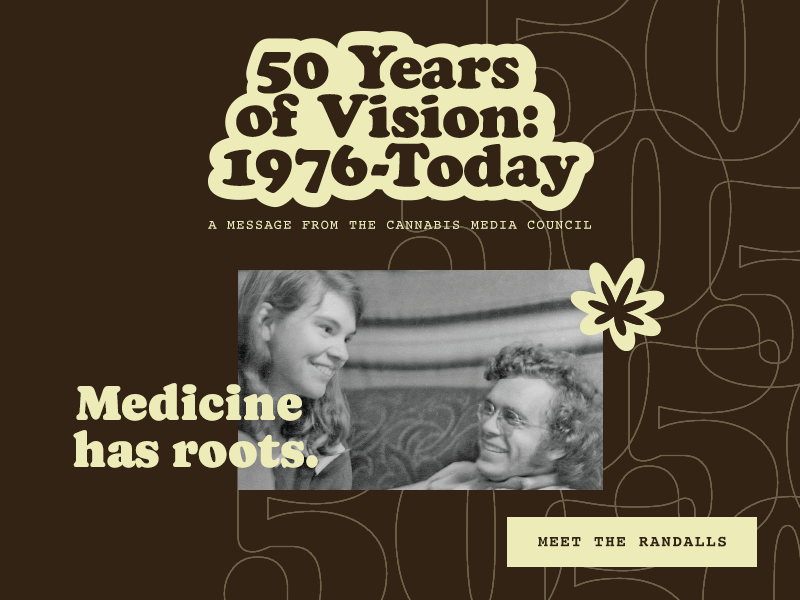


Most cannabis ad budgets are built for the short view, judged week to week on revenue return on ad spend. The Cannabis Media Council's campaigns serve one mission, to deprogram the war on plants, so we aim to generate a different kind of return. For the 50th anniversary of United States v. Randall, we took the long view and invested in impact beyond the usual ROAS.
Who Were Robert and Alice Randall?
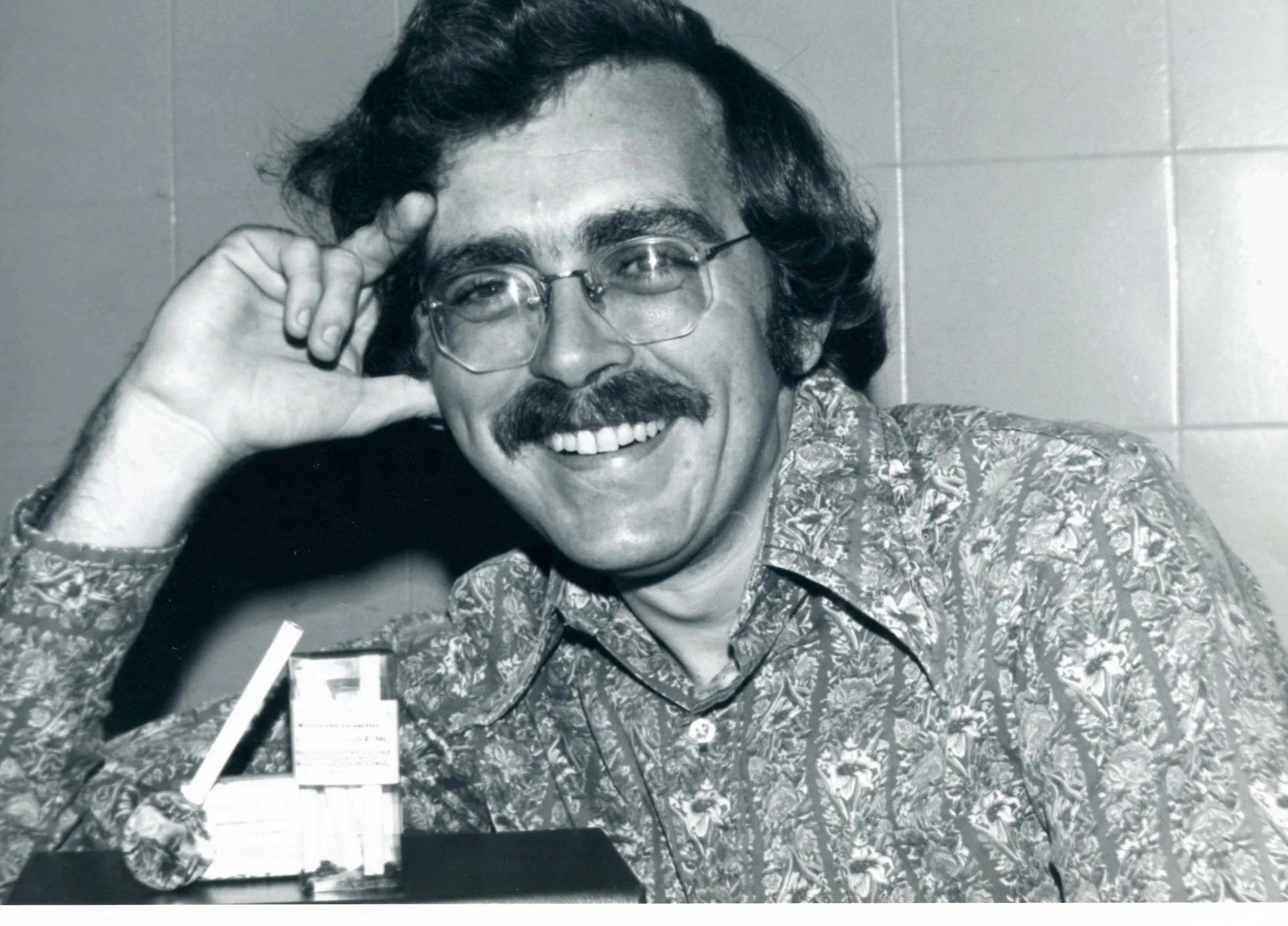
"50 Years of Vision: 1976-Today" shines a light on the early days of advocacy for medical cannabis and patient access and illuminates a newly digitized public archive of the movement that made this industry possible. The campaign's seeds were planted during a conversation with Alice O'Leary Randall. In 1976, after she and her husband, Robert, were busted for growing a few cannabis plants on their sun deck, they told their lawyer that Robert was using cannabis to relieve the symptoms of glaucoma. The lawyer's answer was simple: prove it. "So we had to prove it," Alice told us, "and that became our life's work."
That year, a federal court in Washington, D.C. ruled that Robert's use of cannabis was a medical necessity. Few people could see where that ruling would lead. Today, millions of patients have legal access. "But 50 years ago, there was one," Alice says.
Alice had the foresight to save every clipping. Through Project 50, she has preserved decades of photographs, documents, and voices. She knows firsthand why that matters. "Without history being preserved, Robert and I wouldn't have had the data from those hearings to formulate our own case," she told us. One generation's records became the next generation's foresight.
This November 24, the 50th anniversary belongs to Alice, the movement's wisdom keeper and one of its true visionaries. Our role, alongside our partners at NORML, is to bring her work into view. As NORML founder Keith Stroup puts it, preserving these roots "isn't nostalgia. It's strategy."
How the 50 Years of Vision Campaign Took Shape
The campaign's one focus: help people connect with the longstanding record of advocacy so we can integrate the wisdom and keep going until we win full legalization. Our ultimate ROAS.
The storytelling.
In a filmed interview with Nancy Einhart, CMC board leader and editor of our Just Say Know blog, Alice tells the history in her own words. Those words became the ads: "Botanical Bigotry Didn't Stop Them. Meet the Randalls." and "In November 1976, there was one legal medical cannabis patient in the US. Today, there are millions." A 300-word native advertorial runs under the same headline.
The ads.
Our creative agency, Sister Merci, built the work from the brief: the Randalls set out to save one man's eyesight, not to start a movement. Yet Robert "felt like the only one to make the lifeboat, and that there were cries in the water all around us," Alice told us. "We couldn't walk away." The strategy: highlight their partnership and let her words lead.
The Story Lab.
Pulse Signal Agency, founded by CMC board leader Rose Fulton, designed, built, and donated the landing page through its Story Lab. It stands alone or embeds on any host's domain as a free resource. The vision: help people see the Project 50 archive the way Alice does, with page-turning folders of her clippings, a 50-year rescheduling timeline, and direct links into the open archive held in a Google Drive.
"Alice kept this record for fifty years so that it would not be lost," says Rose. "Our job was to build it a front door. We wanted anyone who lands on this page, whether they are a journalist, a student, or a patient, to turn the first page and keep going."
The Channels:
The ad campaign launched on November 4, 2026, through CMC media partners on Meta, sponsored by Transparent eCom; programmatic display and native placements also sponsored by Pulse Signal Agency; and via advertorial inclusion and page hosting with cannabis publishers, including Beard Bros and Fat Nugs, who are part of our Cannabis Publishers Circle.
Why Access Became the Campaign's Creative Focus
Project 50 started with a search. Looking online for Robert's 1976 court decision, Alice found almost nothing, as she told A.J. Herrington for Forbes. The movement's early history was out of sight, sitting in paper files and newspaper clippings, so she began digitizing it herself. The decisive creative decision—and the heart of the campaign as a whole—was about the same need: access.
What's Next for the Project 50 Archive
Look back to see ahead. Our PSA strives to help a free, public archive come into view for the people building this industry, told by the people who lived it. Alice sees clearly that the work isn't finished. "We can't become complacent," she says. "We have not won."
That's why the campaign doesn't end with the anniversary. Through November 24, 2027, we'll mark the full 50th year by sharing highlights from the archive and continuing to uplift Alice's voice today and her lifetime of wisdom-keeping. Beyond that, we're exploring how to keep this living legacy going with more legendary advocates who live the truth that Medicine Has Roots.
See how the Cannabis Media Council campaign came together, and the vision behind it, at 50 Years of Vision.