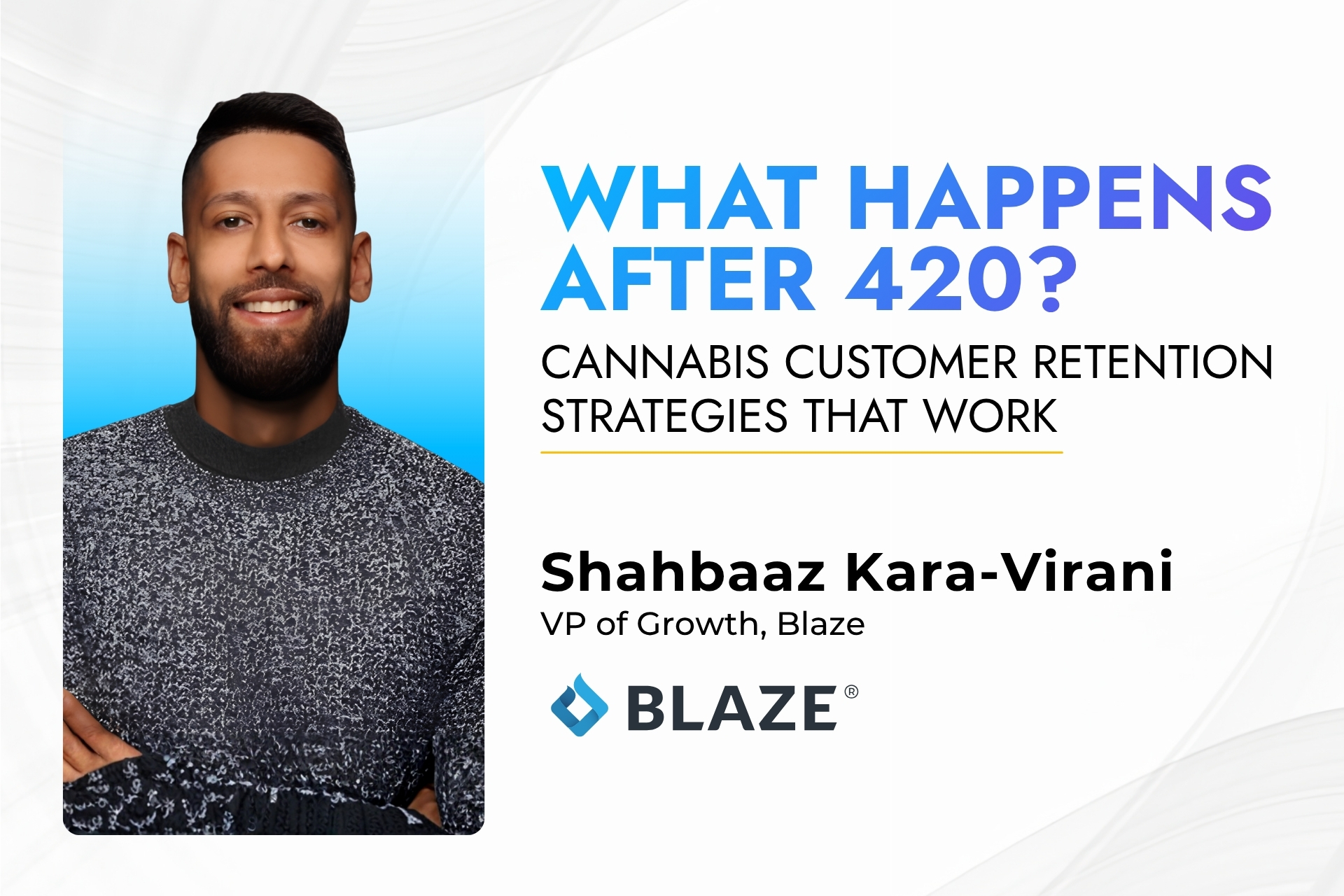
The 420 sales spike is great, but what happens the week after is what actually determines whether those customers stay. This podcast shows you how to turn your 420 momentum into a lasting retention system that keeps first-time buyers coming back all year.You'll learn why retention matters more than acquisition for long-term dispensary profitability, how to identify and re-engage customers who came in for 420, and how to build post-holiday campaigns that convert one-time shoppers into loyal regulars. If you want the 420 holiday to mean more than a single-day revenue bump, this session gives you the framework to make that happen.

100+ Cannabis Marketing Conversations
The lessons, mistakes, and growth strategies behind the industry’s most recognizable brands.
Browse Episodes
After 420: How to Turn a Sales Spike Into a Retention System

Watch Our FREE OnDemand Webinars
Just fill out this form and you are set to watch.
Key Insights
- The true revenue opportunity from 420 is not just the day's sales volume - it is the first-purchase and lapsed-buyer cohort that walked through the door, and whether the dispensary has a system to bring them back within the next 30 days.
- Capturing customer contact information at the point of sale is the single highest-leverage retention action a dispensary can take during high-traffic events - without it, there is no operational path to a second purchase.
- Ad exposure to regular customers measurably reduces churn and increases customer value, with data showing 20-30% higher customer value for ad-exposed shoppers and a tighter churn band compared to unexposed segments.
- Online ordering adoption varies dramatically across dispensaries - from 3% to over 70% of transactions - and stores that actively merchandise the online experience see meaningfully higher basket sizes, making digital touchpoints a retention lever most operators are underusing.
- Email and loyalty list quality matters as much as size - a file of 10,000 subscribers with near-zero engagement is a signal that the communication strategy needs to deliver genuine value, not just promotional volume.
Expert Answers
[{Why does 420 retention matter more than 420 revenue?}
The best dispensaries understand that 420 is a customer acquisition event as much as a sales day. The surge in first-time buyers and lapsed customers represents a high-value cohort who showed enough intent to come in once. The real question is whether the dispensary has a system to bring them back. Without capturing contact information and deploying a structured post-event communication sequence, the revenue lift is one-time. With it, 420 becomes the beginning of a retention relationship that compounds over months.
{What does a smart post-420 retention strategy look like?}
A strong post-420 strategy starts at the point of sale with contact capture - email and phone number - before the customer leaves the store. From there, a sequenced communication plan should trigger within the first week: a thank-you, a product recommendation based on purchase history, and a value-based offer that does not anchor the customer to discount pricing. The goal is not to give away margin but to provide enough relevance that the customer wants to hear from you again. Retargeting campaigns aimed at the 420 cohort in the 30 to 45 days following the event reinforce that message across channels.
{How does advertising affect dispensary customer retention and lifetime value?}
Ad exposure to existing customers has a measurable impact on both retention and lifetime value. Data shows that customers who shop once every 60 days and are exposed to retargeting ads show 20-30% higher customer value over time compared to unexposed segments. Advertising also tightens the churn band - meaning ad-exposed customers are less likely to lapse into inactivity. For retention-focused operators, this makes retargeting existing customers a high-ROI use of ad spend rather than a pure acquisition play.
{How does online ordering connect to in-store retention outcomes?}
The range of online ordering adoption across dispensaries is striking - some stores see as few as 3% of orders placed online, while others see more than 70%. Beyond the operational benefits, dispensaries that merchandise the online order experience well consistently see higher basket sizes. When a customer comes in for a pickup order, the in-store interaction becomes a second touchpoint in a single visit - an opportunity to add to the basket and build the relationship. Operators who treat online ordering as a retention channel rather than just a fulfillment convenience are getting more out of each customer interaction.
{Why does contact information capture matter so much during high-traffic events?}
There is a hard monetary value to capturing a customer's contact information that most operators underestimate. Every email or phone number collected is a non-zero future opportunity - even if that customer does not respond for months, a well-timed message at the right moment will eventually convert. Dispensaries that do not capture contact information during 420 miss the only mechanism they have to extend that customer relationship beyond the initial visit. The event generates the traffic; the contact capture determines whether that traffic turns into a retention system.]
Put these Insights into Action
Whether you're optimizing product mix, improving customer retention, or measuring market performance. Mediajel helps cannabis operators turn data into profitable growth.
Marketing Attribution
See exactly which campaigns generate dispensary revenue - not just clicks.
Track Campaign Revenue
Programmatic Advertising
Reach the right customers with data-driven targeting that maximizes ROI.
Launch Programmatic Ads
Cannabis SEO
Capture more high-intent shoppers and increase organic visibility.
Boost Cannabis SEO
Podcast Highlights
00:00 – Introduction: Turning a Sales Spike Into a Retention System
Jake Litke and Shabbaz open by framing 420 not as a revenue milestone but as a retention starting point. The conversation sets up the core question every dispensary operator should be asking after a high-traffic event: what happens to those customers next, and what systems are in place to bring them back?
10:00 – Shabbaz's Path From Salesforce and Tech Into Cannabis
Shabbaz walks through his career progression from Salesforce and enterprise software into cannabis, joining Blaze and becoming involved in the Cannabis Collective. His perspective bridges traditional CRM and retail analytics thinking with the operational realities of cannabis dispensaries - a combination that shapes the retention frameworks discussed throughout the session.
18:00 – How Advertising Reduces Churn and Lifts Customer Value
Drawing on MediaJel data, Jake explains how ad exposure to existing customers - particularly those shopping every 60 days - produces a measurable 20-30% increase in customer value over time and tightens the churn band. This reframes retargeting as a retention investment rather than just a new customer acquisition channel.
28:00 – The Online Order Gap and Basket Size Opportunity
The discussion reveals a striking operational disparity: online ordering accounts for anywhere from 3% to over 70% of transactions depending on the dispensary. Operators who merchandise online ordering well and use the in-store pickup moment as a second touchpoint see higher basket sizes - a concrete opportunity that most operators have not fully activated.
42:00 – Why Contact Capture Is the Most Valuable Moment in Any Sales Day
Shabbaz makes the case that failing to capture customer contact information during high-traffic events is the single largest missed opportunity in cannabis retail. He puts a monetary frame on it: every email or phone number is a non-zero future revenue opportunity, and without it, there is no mechanism to extend the customer relationship beyond the first visit.
55:00 – Biggest Missed Opportunities in Cannabis Retail Retention
The session closes with Q&A covering the most common gaps in dispensary retention strategy: lack of contact capture systems, over-reliance on discounts that attract low-lifetime-value customers, and the emerging opportunity in market consolidation for operators with strong customer files and retention metrics.
FAQ
Frequently Asked Questions
[ {What is the best way to retain 420 customers after the event?}
The most effective post-420 retention approach starts with capturing contact information at the point of sale - email and phone number - before the customer leaves. From there, a sequenced follow-up within the first week should include a thank-you, a relevant product recommendation based on purchase behavior, and a value-based message that does not anchor the customer to promotional pricing. Retargeting campaigns aimed at the 420 cohort in the 30 to 45 days following the event reinforce retention across digital channels. The window after a major sales day is when intent is highest and the customer relationship is easiest to extend.
{How does advertising help dispensaries retain existing customers?}
Advertising to existing customers - particularly through programmatic retargeting - has a measurable impact on both churn and lifetime value. Customers exposed to ads show 20-30% higher customer value over time and demonstrate a tighter churn band compared to unexposed segments. This makes retargeting existing customers one of the highest-ROI applications of ad spend for dispensaries focused on retention, not just new customer acquisition.
{Why should dispensaries prioritize email and contact capture at high-traffic events?}
Contact information is the mechanism that converts a one-time visit into a retention relationship. Without an email or phone number, there is no way to reach that customer again on the dispensary's terms. Every contact captured represents a non-zero future revenue opportunity - even if that customer does not engage for months, a well-timed message at the right moment will eventually bring them back. Dispensaries that do not capture contact information during 420 or similar events are leaving their most important retention asset uncollected.
{How does online ordering affect dispensary retention and basket size?}
Online ordering adoption varies dramatically across dispensaries - from single digits to over 70% of transactions. Stores that actively merchandise the online experience and treat the in-store pickup moment as a relationship touchpoint consistently see higher basket sizes. The customer who ordered online and comes in for pickup is already in buying mode and has shown intent. That interaction is a natural moment to extend the basket and reinforce why this dispensary is their preferred option.
{What makes a dispensary loyalty list actually valuable?}
A loyalty list is valuable when the communications sent to it deliver enough relevance that customers want to open them. A large list with near-zero engagement is a sign that the messaging is not earning attention - too much promotional volume, not enough genuine value. The best dispensaries build lists by providing a reason to opt in beyond a one-time discount, and they maintain engagement by sending messages that reflect actual purchase history and preferences. Size matters less than whether the list behaves like an active customer relationship.
{What does post-420 retargeting look like in practice?}
Post-420 retargeting involves deploying programmatic display campaigns specifically targeting the customer cohort that visited or purchased during the event window. This can include device-level targeting matched against in-store visit data, as well as email retargeting to the contact list built during the event. The goal is to extend the relationship at a moment when purchase intent is still warm - typically within the first 30 to 45 days - before that cohort reverts to normal shopping patterns or churns entirely. Pairing this with a relevant message, not just a coupon, produces better long-term retention outcomes. ]
Cannabis Podcast Full Transcript
{Introduction
Jake Litke: Hello everyone. Welcome to another episode of Cannabis Marketing Live. I am your host, Jake Litke, the CEO at MediaJel. And today we have Shabaz, who is joining us from Blaze and some other storied companies, we'll get into that. Today we're going to be talking about retention in general, but more specifically how you manage retention after large events — in this case 4/20 — but there are other events in retail that have a similar type of spike, like Black Friday and other things. Shabaz, thanks for taking some time today to spend with us. Let's start with just a quick — actually this is kind of usually how I start all these conversations — which is, how did you find yourself in the cannabis industry? I know you had a career prior to that, and I'm curious as to what that looked like for you, everyone has a slightly different version of that.
Shabaz: Absolutely. Just want to say thanks for having me on the pod, and thanks to Cortney for tracking me down and working with me, appreciate you both having me. Cannabis industry, can't believe it's already been 8 years in this space, or seven and a half. And the way I got into it was twofold. So number one, I've genuinely always been interested in cannabis growing up, I was an athlete and also worked in sales at Salesforce, and everyone could drink before games or after work, whatever the case is, but no one could ever just smoke a joint, which I thought was crazy. And then simultaneously, while I was at Salesforce, a buddy of mine who I went to school with at Western, he got this job at this company called Lift & Co. And at the time crypto was hot, cannabis was hot, cannabis stocks were going off — Aurora, Canopy — everyone, there was a lot of zero-interest-rate — it was just a time different from now, I'd say. And medical cannabis was big in Canada, and I was contemplating a move away from Salesforce, and it was crypto or cannabis for me, I like both, I believe in both. And I ended up getting this job as the head of sales at Lift & Co. And Lift & Co. was interesting, they started off as an event business — that was the B2B side — but what they really were, were they were like effectively a Yelp, or like a Google Reviews, for medicinal cannabis, because in Canada you had the medical cannabis side of things, and everyone was getting all these different types of flower and oils, and no one was actually writing about it, no one actually knew. And so Lift became this amazing website with like 100,000 visitors that was built for the medical space. Then we built a trade show, so best way to describe it is like MJBiz Canada, and it was a consumer day, and it was a VIP B2B day, and then it was kind of like a brand day, so it was like the first of its kind, this was seven and a half years ago. Yeah, and that's how I got into cannabis, which is crazy.
Jake Litke: Yeah, so eight years, so that's like 2018, that's when I — and that's when I got into the cannabis space as well.
Shabaz: Wow. I don't even know how you got into it, tell me your story.
Jake Litke: Well, my background is in building technology platforms around advertising, mobile, geo data, that kind of stuff, and I just intersected with someone who was an early investor in some of the Canadian LPs, and they were trying to build some products in the cannabis space, and, to make a conversation short, we basically realized that there were no good advertising tools or distribution for cannabis brands or retailers. So we decided that we were going to build a platform to do that, which turned out to be hard to do, but we're still here, and we've kind of gone through all the cycles as a business, along with the industry. I think things are, in many ways, the best they've been, I know that it's still very very difficult to operate, and we've seen the cycles in the different states of the early heady days of everyone getting licenses and getting excited, and then too many retailers or too many brands, and pruning and all of that. But, we work with a lot of companies, MSOs that are running pretty good businesses right now, they're growing, there's a lot of interesting consolidation happening, which I think — there's pros and cons to that, but overall is kind of good for the market, and I think it's an exciting time to be in cannabis.
Shabaz: I agree, I totally agree. I think the beauty of what you just said is that, number one, it forces you to be an expert, and figure out where to play, when to play, and who to play with, like the fact that there's so much compliance, and each state's so different, makes you so — like your knowledge capital, people need to be able to work with you. And the second thing is, you see all these patterns, and it's like these markets follow such similar patterns, it's almost like seeing the future, right, it's almost like having a cheat code in a way. I was just in Europe, and a lot of similar cycles, a lot of opportunity though, and so I think the benefit is figuring out where to find that opportunity, because there's this arbitrage associated with it. But yeah, I agree with you, man, great time to be in cannabis.
Jake Litke: Couldn't agree more.
Shabaz: Yeah, should have started now, not eight years ago, but we are where we are, it's been a fun ride though. You know, think about how much you know though, think about the barrier to entry, like for such a young industry, the barrier to entry is challenging, right, I'm like — it's like, what would you tell — I'm sure many people ask you about your opinion about the industry, about jobs in this industry, economic viability. If I was trying to get a job in this industry, what would you tell me, kind of thing, like, how would I get a job in this space, out of curiosity?
Jake Litke: Well, I mean that's a pretty broad question, right, because it's like, it is an entire industry, that's like kind of saying — because there's so many layers, you could be from grower to social media marketer, those are totally different careers.
Shabaz: Yeah.
Jake Litke: But broadly, I would say the biggest thing to look at is what the organizations that you're going to work for, and where they're at in the market, right. I think you still see a lot of — there's still some strong single operators out there that have a good business, have a good market, but a lot of the single operators have fallen off, that maybe didn't have the right operational discipline. And then you've got a pretty interesting chess game going on, or maybe more of a risk board than a chess game, in the US, going on with acquisitions of MSOs, and big names everyone thought were going to be the big hitters going through receivership, and then other companies coming out that are scooping up assets that people didn't expect necessarily. So it's like being in Game of Thrones.
Shabaz: It is. And some big news obviously coming out today with Verano acquiring — the Fluent stock deal. So Dave Vanran, their Fluent CEO, he's a good friend, and he's in this group I run called the Cannabis Collective, which is a group in New York, like executive leaders also, you should come to some of the events we're throwing, love to have you. But it's cool to be in an industry, and in a position, where that news hits, and, you know, a guy you built a relationship with, the CEO of that company who just got acquired, is texting you, and we're breaking the news on this. So, I host this talk show called Coffee with the Collective, at 9:00 a.m. every other Thursday, and we broke the news on there, and Dave was a founding member, he's one of the reasons why Cannabis Collective actually got legitimacy. And so to see that — that's a second exit, because this first one was from Origin House — it's like, that's what's also — this industry is hard as hell, don't get me wrong, but it's amazing that you get to be so close to it. It would take — the reason I left Salesforce is because I looked around at Dreamforce in San Francisco every year, and I was like, it's going to take me a long time to get into those, everyone's at the conference at Dreamforce, but the deals are happening, and I'm like, how do I get to be that guy, how do I be part of those conversations? And it's such a blessing, and shout out to Canada, because, honestly, I wouldn't even be able to have this conversation, hanging out with you and Cortney, if it wasn't for this industry. So I've got a lot of gratitude for it.
Jake Litke: Yeah, that's great. All right, so let's try to get on topic, I guess, we could talk about the cannabis industry as a whole all day, but we're gonna talk about retention as a whole, which is
Why Does Retention Matter More Than Acquisition?
Jake Litke: something we've been talking about a lot, and I think it's a discipline that does not get as much attention — it's starting to more now — we've been working in a marketing function this whole time, so, talked to lots of operators, and the business is very difficult, a lot of people, almost no company has the marketing budget that they would want, or should actually have, for an actual brand that they're trying to build.
Shabaz: Yeah.
Jake Litke: And so people are really heavily focused on winning new customers, however, when you're in a saturated market, like California, Colorado, Washington, Oregon, a lot of the marketing effort is actually better served at retention, which is something people are starting to learn, it's easier to make more revenue from your existing customers, and it's easier to retain customers than to get new ones.
Shabaz: Absolutely.
Jake Litke: And so I'm excited that people are coming around to that fact, because when you're running advertising — I've got a couple anecdotes I use a lot — one is that I try to refer to large brands, like if we look at auto manufacturers, right, car manufacturers, they intentionally set a large portion of their budget, maybe more than half of it, at BMW or Mercedes, they're not trying to get new customers at all, they're simply trying to reinforce the brand relationship with their existing customers, so that when they go to purchase a new car, they're still relevant, right. But let's get into 4/20 — we see 4/20 spikes every year, right, so our whole platform is measuring advertising to conversion, so you see the charts, you see Fridays are the most busy days, and then you see 4/20 is this like tower in the year. I would say the tower was a little less pronounced this year than in previous years, it feels like the spike was spread out a little bit over more days, not as pronounced, but you — I mean your platform is measuring this as well, I'd love to hear, to the extent that you're allowed to and can share, what you saw happen on 4/20.
Shabaz: Yeah, actually I was just going to send you this, but we have a 4/20 report that we just released, that kind of showed a bunch of different types of metrics, and I'd highly recommend — I don't want to talk too much about Blaze, or be too much of a fanboy, but obviously that's my job as VP of Growth, and that's one of the reasons I'm on here — one of the interesting things was just the AOV lifts, right, and we can track different types of channels, like mobile app and kiosk, and I think one key aggregate takeaway is that people are shopping through different channels, right, they're going through the kiosk, they're going through the mobile app, they're going online, right. And so the impact for that, moving into 4/20, is that brands got to be able to have a uniform message across all of their channels, because knowing that so many of these customers are coming from all these different places, and then be able to actually drive promotions, and stack discounts, and these types of things — because, to your point, like some stats, I'm just looking here, it's like, there's a 56% increase on average order value from things like AI recommendations, right. So there's so many things, so many factors at play, and I think that the impact for the retailer is, this is a great time to also test your theories on what you're trying to do, and also get a better sense of the sample size of, hey, where are your customers actually shopping, do your customers care about the displays, or should they come into the kiosk. There's this famous case study from McDonald's, where McDonald's wanted to actually reduce labor, and so they introduced kiosks, right, and what they found through the kiosk is that, because people didn't have the stress of standing in line, seeing all the craziness happening, they can just go to the kiosk, take their time, get their fries, supersize them, whatever, it's like the basket size went up like crazy. And so, in a very long-winded way to answer your question, it's, 4/20, obviously big holiday, big opportunity to test different components and different pieces, big opportunity to get data, and it's a great opportunity, to your point, coming back to loyalty and retention, make sure that you're hitting all those customers on all those channels, and then bringing them into an arena where it's like, hey, how do I actually understand who my customer is, as a whole, because if I can do that, and I can piece together that data, and I can get a view of that, then I can actually market to them, and drive some retention, and position the types of things that you want to position to them, to get a true lifetime value that's increasing, and increasing, and increasing. So, long-winded, but exciting day, so I needed to share some stats.
Jake Litke: Yeah. And how do you see the retention curve change for a big event like 4/20, versus a normal — the normal curve, right, so, one of the things that we've started doing the last year is looking not just at, here's ad impressions and then here's purchases made from those devices, but looking at the entire customer history, and saying, what does ad exposure do for incrementality, meaning, for your regular shoppers, right, this is about retention, and then increasing your customer value. For people that shop once every 60 days, ad-exposed has, you know, x percentage, 20, 30% increased customer value, and also has the churn band reduced, right, when you're advertising to people. How do you see that in both cohorts — I'm going to use two cohorts here, which we use a lot — frequent shoppers, so your regulars, versus people that you haven't seen in at least, let's say, 6 months, that just came in for 4/20. What kind of data points do you have on that behavior?
Shabaz: Lots, man. I mean, especially with POS as well, you can start to actually segment your customers within those profiles, and then you can splice and dice even deeper depending on frequency, gender, basket size, a variety of different components to slice and dice. I think the bigger, the more interesting question is, we can
Are Retention and Loyalty the Same Thing?
Shabaz: start to see what retention means, as we break it down, but it's like, what do you think the retailer thinks of as retention today? Are they — because part of the challenge I see with growing orgs is that there's different definitions of retention and loyalty, right, and it's interesting because now I'm on the other — I take off my cannabis hat, now I'm on the other side, my dad has a chain of pet stores, right, and so it's like a lot of the retail I've learned here, like at TJX or whatever the case is, it's all very interestingly similar, but with different technologies and different maybe verbiages, but like retention and loyalty are two things I feel like we talk about all the time, but are we even talking the same language? So in your experience, what are retailers considering retention and/or loyalty, and are retention and loyalty the same thing in your books?
Jake Litke: I would say, well, the first answer to that question is, it's wildly different, right, you've got such a spectrum of operators, again, like you've got a small operator with one or two stores, and then we have MSOs with like 50 stores, right, and so they're different organizations, they think about the numbers differently. I think that loyalty is easier for people to wrap their head around, because it's a pretty simple concept, and it's very measurable, like, okay, we gave them points or whatever it is, and they come in and redeem. Retention is, unless you're really on top of your data, I think it's unfortunately one of the last things that people look at, when they look at their marketing, or they look at their customer behavior, they look at, oh, how many new people did we get, net new, what is our loyalty program doing, but there's this like middle-child bucket of your regular shoppers that are in there, and they're a material amount of revenue, but they're not throwing off like a hot signal necessarily, and you really have to spend some time to tease the data out to understand what they're doing, but I think that's kind of the meat of the sandwich.
Shabaz: Yeah, yeah, absolutely, absolutely, that's a really good perspective. I think when I think about retention, one of the things we measure a lot is, we try and measure attach rate, right, like, what are they attaching, how many times are they attaching the same thing, plus, another, adding to their basket. So I think a good measure of retention here is, for the customers that we see all the time, are they, or this retail environment sees all the time, are they just coming back on 4/20 and just trying to get the 4/20 discount, right, like, is that really going to move the needle, or is it, hey, it's 4/20, it's a holiday, do I know this frequent customer's basket enough to know the components of the basket, so that I can skillfully make sure that my deductions, or my 4/20 discounts, actually end up helping them spend more, buy more, try new products that they wouldn't necessarily — that's what I think a market success is, is this enough of a trigger point to make my frequent shoppers actually want to explore more, try more, get out of their comfort zone, versus just buying their weekly eighth or whatever the case is, kind of thing. And what's the capacity, or what's the spending band of your frequent customer, is another one, right, like, cats and dogs, in a pet store, like, how — what's the actual band of a cat owner, because they're buying food consistently, like the little tins, versus what's the actual capacity of a dog owner, who maybe is a little bit more inclined for an impulse buy, and maybe doesn't want to try food or whatever the case is. So I think that's the indicator, and that's data I'm curious to look into, I'm going to send you this 4/20 report, I'd be so interested in what you have to say, and maybe do a quick little LinkedIn Live on that report next time as well.
Jake Litke: Yeah, I can go over some of our dashboard stuff that we've been looking at as well, seeing how the numbers change. I haven't really thought about this, but a pet store is not a bad analogy for a dispensary, you've got a similar type of mix of products, with some frequent repurchases that are going to happen on a consistent basis, and then other things like accessories that are — and, you know, we've talked a lot about merchandising this year on this podcast, and then coming down to, how do you put products that people are going to connect with in their path of purchase, right, because you've got a set of customers coming in, they're coming in for their weekly eighth or whatever, maybe they're going to try a different strain, but how do you make it easy for them to discover new things that they may connect with, right?
Shabaz: Right. Indigo does this so well, right, like they do this so well, like they have just a plethora of different things, and, you know, I remember a significant change when I was working — so I grew up working at TJX, Marshalls, Winners, etc., and I remember, to this day, there's not much — you're 17 years old and you're toiling around Winners, folding clothes, there's not much you really catch your eye. I remember the moment where they changed from a static checkout to, like, you got to go through that line, you got to go through that. And so my dad and I were just actually checking out one of the stores that he's opening up, and I've been screaming about the snake line in his one store, and I'm like — but it's like, okay, well, we got to reverse — like, that's a big endeavor after you've already created the store, right, it's a change, right. So I'm curious from you, like, what were some of the best digital or physical displays that you saw across the space, or did you see any stores kind of, for 4/20, doing anything out of the ordinary, maybe like a little shop-in-a-shop or anything like that? Like, what were some of the highlights of how did people take advantage of it from a marketing lens, out of curiosity, if you have any examples, and it's okay if you don't.
Jake Litke: Yeah, well, I've got a pretty specific lens, because we don't really deal with any of the physical stuff, right, so I go to dispensaries every once in a while, but I'm really just in the online world. And so, at that point, it comes down to, what is the offer that's going to be in the ad, right, and then how does that tie into what happens at the store? And you probably see this data as well — something that was interesting to discover, that I didn't realize until we were pulling the data apart, is — well, first let's talk about the online order, right, because everything we measure is the online order, so the disparity between retail locations of how much of their orders are online is vast, like some have 3% of their orders online, and some have like 70%.
Shabaz: Yep.
Jake Litke: Right, in terms of the — but what is interesting is, when people place online orders, getting back to the merchandising concept, some stores do a lot better job of increasing the basket size of online orders, right, and that kind of comes down — you talk about the snake line a little bit, but it's like, okay, I went online because I know I want these edibles and these pre-rolls, and I ordered them, and then I went to the store to pick them up. Some stores are pretty good about increasing the basket size when they get to the store, like, okay, here's your order, but where did you put the place to pick up the order, right, like, is it just right there, or is it through some sort of snake line, do you have to talk to someone, is there merchandise that you can do in between? But let me actually answer your question more directly, usually with digital campaigns, it's going to be a combination of, is a brand featured, right, and did you target that campaign to the right area? So, I'll talk about California, that's where I live, we've been operating for a long time, and we've got — we work with some operators that have full statewide distribution and have a lot of online orders. So one of the things that we've discovered is that, even — and this is kind of like going back to old-school marketing, like just zip code targeting, just understanding the demographics of the zip code, and which brands resonate in that zip code, and then choosing to run a promotion for your retail operation that features a brand that people in that zip code like, that'll move the needle like 30% on your ROAS, right, because people are presented with hundreds of online ads every day, and if they see a brand that they like, you have a much better chance of them looking at it, and then you get the opportunity to tell them what your offer is, are you giving them 25% off, 40% off, buy one get one, whatever that is. So it's usually a combination of, how did you do the targeting, what does the creative itself look like, can you get someone's attention, and then what is the value that you're offering them.
Shabaz: Big time. Yeah, I mean it's interesting, right, like, for it to be a great digital day on 4/20 — like, we're working with — to your point, like, Blaze has an amazing e-com, we acquired Timber a few years ago —
Jake Litke: Yeah, I know those guys, they're great.
Shabaz: Yeah, we got a great engine, I was also at Dutchie for two and a half years during the heyday of our e-com, and also helped launch Dutchie Plus. So online is something that's near and dear to my heart as well, and the reason I ask is because it's interesting to see, state by state, to your point, the offers and the brands that are taking advantage of those. Couldn't agree more with the geofencing. From the consumer side, one of the things that we're starting to see is, there's some AI bud tenders out there as well, right, so, hey, to your point of basket size, we just released one called Herby, and we saw a lot of data in terms of increased AOV, relative to stores that might not have that enabled, and one of the things we're flirting with right now is releasing our own ad network, right, to your point. And so, question for you is, you must see a lot — for that digital perspective to be truly symbiotic between brand, retailer, and vis-à-vis customer that's actually checking out, so many things have to go right, right, and I don't think a lot of people understand how many things have to go right in that process technologically. And so how are you finding the retailer and the brand's knowledge of how to really potentially, even if they don't work together, how do you see that path digitally? Do you feel like the industry is maturing, and getting to a point where they're starting to really understand that and empower that, or is there still a knowledge gap, is effectively the question I'm trying to get to and ask.
How Big Is the Knowledge Gap in Cannabis Marketing?
Jake Litke: There's a big knowledge gap still. We're still — the cannabis industry as a whole is still operating, from a marketing perspective, in an incredibly fragmented way, and there's reasons for that, there's good reasons for that, like, obviously, you've got — just going back to the budget issue, like, cash is just hard, right, and marketing dollars are not write-offs, although they will be for medical now, so that's great.
Shabaz: Here we go, let's go, two hits, let's go.
Jake Litke: Yeah, all of a sudden medical states just got a leg up.
Shabaz: Yeah, which is crazy, we had a discussion on that this morning, more on that to come, but I'd love to drill in later on.
Jake Litke: Well, it's a thing, it's a big thing, right, so you have — and then the other thing that is abnormal in cannabis, is that brands can't sell to consumers directly, right, so that's not normal, like, even if a brand sells most of their stuff through a retail channel — let's say you're selling Bluetooth speakers, right, you're selling most of those through Best Buy or through Amazon, but you can go to JBL and Bose and buy stuff from them. So, and the reason that's important is that, if you're a brand and you're doing marketing, the marketing dollars that you're going to spend, they have to go to a third party, right, so when you spend those dollars, not only do you not get to write them off, you then have to — the only channel is to send them to some retailer that you generally aren't going to have a lot of control over the customer experience. And then, when you bubble up those marketing dollars to your CFO, and say, hey, I spent $50,000, or whatever it was, and then they say, well, what happened with that, well, we had some lift in the store, right, and then someone's like, well, why are we spending our money to send people to the store, we don't have very much money to begin with, let's focus on other channels. So we have had limited success, and we have been doing it for years, we have some retailers where we work directly with the retailer and the brand, and we run co-marketing campaigns, that has been increasing, but is still like a shadow of what it is in every other industry — like take supermarkets, for example, like, all the marketing that's happening in a supermarket — you work in retail — those are all brand dollars, the supermarket's not spending any dollars, right, so the brand is spending the dollars, but it's inverted for the most part in cannabis, where the retailers are the ones that are doing all the marketing, and it should be coming from the brand, but the mechanism to do that just hasn't been in place. When we do it, it works very well, like, we just ran some campaigns in California, there were straight co-marketing campaigns, and one of the ways we've done it is working through the retail channel, and basically carving out part of — because most brands do have a marketing budget with the retailer, but the majority of it is being used for discounts, right, so the brand comes in and says, I'm going to just subsidize the cost of my product, and you're going to promote it, and that's going to be the marketing budget, that's like a lever that works, and people do a lot of. But we ran actual digital co-marketing campaigns for the brand, and we just did this for four brands on this retailer, and all four of those brands had their best months ever. It's just that getting to work together has been a struggle, right.
Shabaz: Yeah, it's interesting, so, we should maybe take this offline, but we got an amazing ad network launching, and one of the things I've kind of been running into is this exact thing, this massive knowledge gap, and so I wanted to ask you if it was only me who's recognizing that. And yeah, man, there's room for a lot of knowledge, there's room for — attribution is such an interesting thing, especially to talk about in a boardroom, but it's like so necessary, it's like, again, goes to show you, the data goes to show you where people are shopping — we'll do a follow-up conversation, I'll show you, because our whole thing is attribution, right, because otherwise it doesn't work, but we are — I'm guilty of this, and I found a kindred spirit — we are terrible at staying on topic. So, I think the conversation is interesting, but Cortney's going to get mad at me, because we're supposed to be talking about retention strategies — let's talk about strategies. How do we give people backstage advice on retention for new and reactivated customers that have come in, they've come into your store, you have a touch point with them, they have a product they've bought, they're probably going to like it because it's cannabis, and most of the products are pretty good at this point, what do you do to get them to come back?
Jake Litke: Gosh, it's such a good question, I'll start very trivially — first of all, you have to get their phone number and their email, that's number one.
Shabaz: I mean, there's — it's such a funny question, because it's like, oh, I'll just get someone's phone number and email, but it's one thing if you're an owner to get someone's phone number and email, but it's another thing to get, you know, a bud tender, at $22 an hour or whatever the case is, to get an email — and maybe one time, hey, you're in the store, that email, etc., but it's a whole other thing to grab that. And so that's actually a massive problem, you multiply that by 10, 20, 30 stores, and all of a sudden, unless your training program is dialed — even the fact of the matter is, if you don't have that phone number and email, but you're saying frequent, so you got them to come back, you built a relationship with them. Second thing, to your point, is understanding the data on that customer, to create a profile on that customer, that you can actively drip nurture different promos to. A couple different companies do this really well, also a lot of illicit market delivery companies do this really well as well, which is fascinating — I wrote this whole piece on the shadow market, and the sophistication between the regulated market and this market. And so the second thing is, you can't do anything to actually drive them back onto any of your channels, in store or online, unless you actually understand a couple key points, and you can put those points together. I think now what's interesting about AI, especially with some of the AI coming out and some of the point-of-sale systems and things like that, is you can actually start to ask, similar to GPT, Claude, etc. — I'm sure you already know this, but we have something coming out at Lighthouse, and you can actually ask Lighthouse exactly how you would start to create promos and bundles based on these different frequency, touch points, times of day, things like that. So, that's number two, I think, going back to your point, retention versus loyalty — I think the difference is, retention, you're proactively reaching out, loyalty, they're retroactively reaching out, it's like you're not having to take an action to get with them. And so I think that piece is, make sure you're marketing them things that they actually care about, at the time of day that they care about, and the frequency that they care about it. And, you know this, but actually getting that profile is much more than knowing what their dog's name is, right, it's those buying behaviors, attributions, understanding who's within their shopper profile, like, are they coming in with a spouse, are they coming in — who are they coming in with as well, because a big portion of this is also the attribution of the person that you're consistently doing this with, right. So from a profile perspective, that's exactly what I would suggest, and the third thing is, you got to hit them on the channels at which they're operating, but also introduce them to new channels. So again, how do you create a moment or a thing that enables them to — because you effectively want to make them evangelists, and if you can get them to create a buying habit or behavior, or condition them to come into the store, use the kiosk, whatever the case is, shop online, delivery — there's a store in Canada, in Toronto, 1922, they went to a full delivery model, and so it's like, hey, how do I turn all my customers into making sure that they understand they can only run delivery through me, because my unit economics are better on delivery. And so I think it's using those customers, once you know they're loyal, to make sure that they're evangelists, and also bring customers back in the store — I know MediaJel is obviously a digital platform, but I'm a huge fan of in real life, I just posted about this, Anthropic just hired — you know, had it in real life, and I'm a big fan of, you know, it was a crazy time — and so one thing I'm trying to do, even at my dad's store, because this conversation is pertinent to me, as a VP of Growth for retailers, but also as a retailer kind of thing —
Jake Litke: Yeah.
Shabaz: — and so, one of the things I'm really trying to do is, everyone who bought above a certain threshold, let's say, above their basket size, during 4/20, it's like, hey, can I get them back into a store, and recreate that memory of 4/20, or recreate that feeling of a good deal or a good sale, and can I make them meet each other, right? If I can create a community, those people are more likely to just come back together, or talk about me in WhatsApp groups, or in Facebook groups, or they're going to give me Google reviews. And so that's kind of the last thing, is the way I get them to come back into the store is, incentivize them with some Google reviews, it's like, can you please give me a Google review, and you get a special perk or whatever the case is. But those would be kind of the three, four ways, and, in real life, mixed with digitally serving them at the right time, is obviously important.
Is It Worth Paying for Customer Contact Info?
Jake Litke: Yeah, that's great. I want to circle back to capturing the contact information, which I think people intuitively understand that they should do, but if you were to put a number on it — let's say that a new customer comes in that hasn't been in the store before, they're not in your system, and they're going to purchase, and they're going to spend, let's say, $100, and you're doing promos, so your total margin on them is maybe 30%, right, where it would normally maybe be 50 or 60, but let's say it's 30%.
Shabaz: So now you have $30 of — still a good margin for cannabis.
Jake Litke: Still a good margin for cannabis, okay, we'll say $20.
Shabaz: Okay, all right.
Jake Litke: Let's say it's $20 now of actual margin dollars, which is another thing we can talk about, as a shortcut to measuring some things, but you've got 20 margin dollars on $100 of revenue, and you have an option to lose some of your margin, in order to capture their contact information, right, so if you were to put a number on it, and say, is it worth $5 to the retailer, to say, over the year or lifetime value, the opportunity cost, to be able to reactivate that customer?
Shabaz: No, no, no, so I don't think it's worth five, $5 is a lot. Like, is it a one-and-done, either I capture them this time and maybe forever lose them kind of thing?
Jake Litke: Yeah, it's kind of a hypothetical scenario, so, you're going to pay $5 for the opportunity to be able to contact them in the future, and maybe — what is your percentage, maybe you have a 30% chance of them coming back in, and capturing another $20 of revenue. So there's a lot of math, and this is obviously a kind of myopic, hypothetical situation, but great question — the answer doesn't matter as much as the question actually, right, the reason that I asked the question is, yes, it's important to capture customers and their contact information, but if you try to put dollars on it, all of a sudden it makes you reframe the way that you think about it, which is, okay, there's an actual hard monetary value to getting contact information, because it is a number greater than zero, opportunity that you're going to be able to get them again, and you might not, if you don't ever email them again. Like, I'm sure I personally have bought a product before, where I signed up for something, and they have my email address, and I didn't really want it then, and I probably got like 20 emails over a year that I ignored, but they got me at the right time with the right thing, and I was like, oh, you know what, I actually do want that, right, which is an opportunity that will never exist if you weren't interesting enough in the first place to be stuck in the memory, right, without prod.
Shabaz: Yeah, man, and that — that would be my answer, it's like, if I got to pay people to want to communicate with me, and there's only a 30% chance that they're going to communicate with me —
Jake Litke: Yeah, well, I just made those numbers up.
Shabaz: No, no, and what I'm saying is, this fundamentally goes back to how I look at retail as a whole, and I know retail is obviously very transactional in a lot of ways, but if we're talking about frequency and lifetime value, it's really not that transactional, right, over a period of time. And so, I can only tell you, from the way I look at retail at Pet Planet, which we said, and we liken it to very similar to the cannabis industry, which I think the cannabis industry is a little bit different consumer, right, wide range, like there's some differences for sure, but the way I look at it is, I want that person to want to hear from me, I want that person to believe that the value I'm delivering in my emails, whether it's offers, also comes with the idea that I'm helping them buy, right, and this is something I see all the time in the pet store, is, everyone cares about pet longevity, I'm a dog dad, I have a dog of four and a half years, he has Addison's disease, I don't know how to buy all these 1,700 SKUs, but I do know that there's some things in here that I am looking for that I don't even know I'm looking for, but I'm looking, right, especially if it has to do with the longevity of my dog. And so, I'm more apt — because that, to me, is an inelastic good in a way — for frequent flyers, frequent customers — I love airlines, by the way, and loyalty and airlines, a different conversation — but I think it also depends on the type of customer that you have, you also want the right customer, if I have 10,000 emails but I have five opens, it's like, wow, I'm doing something wrong, I'm not reaching them, or whatever the case is. So I think, you know what, Jake — I think, no, man, I —
Jake Litke: I I I —
Shabaz: You're not going to give him a $5 discount for that.
Jake Litke: I'm not giving up my margin for emails right now, because I want to be providing a service, I want them to want to actually talk to me, and come back, and be like, damn, that's why a dealer is such an interesting thing in the illicit market, right, yes, the dealer controls distribution, but if you like your dealer, it's a special thing, right, it's a special thing — I was just in Barcelona, I just saw this, right, I just saw this in place. So I think there's traditional means to retail still existing on those structures, but, at the end of the day, I want someone to want to buy from me, and if they don't want to come into the store, awesome, don't care if they're a loyal customer, they want to buy online, guess what, I'm going to deliver, and they're going to get the same brand promise, and it's going to be uniform across my whole experience, doesn't matter what channel you get me on, but I'm not paying you for your email, because I'll probably find it anyways.
Shabaz: All right, you're sticking your principles, I like it. What about you, what would you do, what's your answer to that?
Jake Litke: I would say that, with the right data analysis — if you understood your data well enough — you wouldn't — I wouldn't recommend doing it if you didn't have the corpus of data to do it, but if you are a business that is looking — for some businesses, like, 5%, 10% more sales is going to be the difference for them, like, succeeding or not, or paying their rent, and so if you can say, I know my open rate is this, I know my conversion rate is that, and I know that if I offer someone an extra pre-roll that cost me 50 cents — I use a higher number — but there's a there's a numerical path where it makes sense. I'll give you an example, okay?
Shabaz: And so, you know, 100%, there's a numerical path, especially if those 30% opens lead to, say, 20% conversions, 20% of those conversions have a delta or deviation of, you know, like a tenth percent, then it's like, oh wow, then it's like, amazing, this works, because you'll find a diamond in a haystack, right — I'll give you an example, this lady at Pet Planet, same thing, like, she came in, she bought like $1,000 worth of food at one time, we were like, holy cow, like, no one's doing that, right, and it's like, okay, is it worth like the needle-in-the-haystack mentality, relative to cost of acquisition, right, obviously.
Jake Litke: So it's — I would actually point the scenario that I was thinking about was less the needle in the haystack, and more small incremental gains, in terms of sweeping the stuff that's fallen off the table, right, like, you have customers that fall off the table, and can you sweep some of them back onto the table?
Shabaz: Big time, so big time. There's a lot of hypotheticals in there though.
Jake Litke: No, I get it, and I actually had a story before I started talking to you, about the other story that you would have really liked, and now I've forgotten it. So, great hypothetical question, I love that, I think just to close the loop on it, yeah, it's really got to depend on the cost of acquisition, relative to the increase in the delta, and over a given period of time, like, is that 30 years, is that a 30-year depreciation, or what is that?
Shabaz: Yeah, but one of my favorite sort of mental exercises is looking at the null hypothesis, right, and looking at, okay, there's a nonzero factor here, if you think about the scenario that you create, how big is it away from zero, right. I remember what I was going to tell you — so at Lift & Co., one of the things that we really wanted — so we had launched a data program, okay, you're going to love this — so the idea behind what I went to do there, real quick, for contextual sake, was, Lift was a trade show, and this website, this Yelp-type website, but then, obviously, we had a ton of data, right, and so we started to package our data out, and one of the things we wanted to collect was, we wanted to understand buyer behavior from the first 25 dispensaries in Toronto, right. And so one of the ways in which we were doing this, which was horrendous, now that I look at the P&L and the unit economics, is, we were paying $5 per receipt, okay, $5 per receipt, and what we started to see was, a lot of people were gamifying the receipts, etc., etc., and so our cost of acquisition ballooned, right, and we hadn't had enough information or data amongst all the SKUs that we could actually draw patterns and package that up from a data perspective, so our CAC ballooned, and we're like, holy cow, we need to rejig the return. So one of the things we realized instead was, we started giving points, we started contesting it, right, and contesting it was way cheaper, with way more yield, right, "hey, you have a chance to win an all-inclusive vacation in Mexico if you upload your receipt," which cost us like four grand, versus, like, four grand divided by $5, that's whatever amount of receipts that is, kind of thing, right. So, to your point, the math has to math, but different ways of trying things for sure. And I think the most important thing is, you think about these questions as a retailer, and ask yourself, hey, what's my loyalty program actually going to cost me, right, like, what's the cost behind all the actions that I'm trying to do to drive retention and loyalty, because everything has a cost associated with it, especially when you're trying to get that customer back, or acquire them.
Jake Litke: Yeah, yeah, I mean there's a reason why all successful loyalty programs use points generally instead of dollars, right, because you are, at that point, printing your own currency, and you have currency control at that point, in terms of what it's redeemable for.
Shabaz: Yeah, big time. Again, asking in aggregate, but any examples of some great loyalty programs you've seen across the space, or maybe even across — like, do you have a favorite loyalty platform in general, even not in cannabis, like, what does loyalty mean in the regular sense of the word, in other industries, are there any platforms that you abide by, I know people love Delta, or, so what would you have to say there?
What Do Great Loyalty Programs Look Like?
Jake Litke: I mean, I'm on the — there's a couple cults I got sucked into years ago, for sure, Amex is one, they've got me locked in pretty good.
Shabaz: Nice.
Jake Litke: Naturally, Marriott acquired my attention when they bought Starwood, and so, you know, that's a good example. So Marriott's a perfect example, because I travel a fair amount, and I almost have lifetime platinum status, not quite, but I have definitely made decisions to choose to stay in a Marriott property, over what was probably a less expensive, cooler boutique hotel, in the same place I needed to be, because I wanted to check the box on my number of stays in a year, right, for the —
Shabaz: Yeah, for the future game.
Jake Litke: Yeah, incredible, they do a really good job of that.
Shabaz: They do a really good job, it's like, why? So, just really quickly, just on this note, and I'm not trying to digress by any means, but it's an interesting point, so it's like, okay, but there's a ton of different loyalty programs for hotels, right, there's Choice, like, shout out to the Fairmont, right, and so Marriott not only had to capture you in some way, they had to give you the ability to choose from a certain set of things, and they had to be so much better, they had to hook you in in such a way that other programs didn't matter anymore, right. And I think with cannabis, like you had a retailer — in New York, you have 600 retailers, there's retailers across the street from each other, right, all these different places. And so it's like, is the loyalty program enough in cannabis today, to make you not want to go somewhere else, and be proactive about the fact that, no, I'm coming to this place, like, do you believe the loyalty programs are there right now? Obviously varying states can do varying loyalty programs, and it differs, and things like that, but do you believe loyalty in cannabis, from a retail perspective today, and/or a brand perspective?
Jake Litke: I think — I don't, it's a big space, so someone may have done this, but I would say the thing that I haven't seen a cannabis loyalty program do effectively, is reward someone for long-term status, in a meaningful way. Yes, you get points, like, okay, you get points, and you can redeem those for dollars, but what Marriott has done very well, and Amex to a certain extent, is they put you in tiers, right, and your history of loyalty with them puts you in different tiers. So, like, when I check into a Marriott hotel at this point, I get a free room upgrade, usually, if there's one available, without having to pay anything, which doesn't actually cost them anything, because it's an empty room anyway, they're putting me from one room to another room, but I'm incentivized as a customer to continue to use that loyalty program, because that loyalty program compounds over time, if that makes sense.
Shabaz: Of course, man, of course, I mean, compounding is a secret that no one ever tells you about, right, so it's actually a really interesting perspective — why is there not, like, I don't think I've seen that — they pick a brand that's in a lot of states, like, I don't know, STIIIZY or Cookies — well, Cookies has their own problems — but why is there not like a gold card for that, like, you get the silver card, gold card, your platinum card, your super, super VIP card, or whatever?
Jake Litke: Yeah, like that. I think if you have that, if you want to capture a national audience, and you want to be a brand that, when I go to New York, I go to New York pretty frequently, if I go to New York, what you want to combat as a brand is, someone going, oh, I'm going to try out this new thing, because I want to see what they have to offer, you want them to be like, oh, I need to go to my store, because I need to keep racking up my points, my status.
Shabaz: Yeah, exactly, exactly, and that also bleeds into the fact that that's actually how a lot of brands should try and educate retailers on — brands don't want to, brands shouldn't try and be in every store, as well, and that kind of goes back to that education gap, which is, retailers and brands have the capacity to actually work together to build that, because a big thing is, I want the loyalty program to incentivize me not to go anywhere else, but if I do go to that other place, I just can't get that — I can't get that baby Jeeter, I can't get that STIIIZY, right, and I don't know if I see a lot of that, like a lot of those exclusive drops, or things like that, and that's another way to create momentum, and to create loyalty, and advocacy, and evangelism, especially if they're getting access to that all the time. So, yeah, man, really, really good point, I love the point about the compounding over time, and what that time is, I think that's a great point, in terms of loyalty today, that I'm not seeing, because I can tell you, I smoke STIIIZYs and baby Jeeters, and between the two, baby Jeeters are pretty good.
Jake Litke: Nothing's holding — I mean, they're both great, like they're both great and have good products.
Shabaz: Yeah, I like — I mean those are both brands that we do work with, so I'm biased, but they're good people, and they're good products.
Jake Litke: I don't do any work with either of those teams, and, as a consumer, they're great brands, great products, I love — Jeeter speaks to me a little bit more, because I love their apparel, I also love, obviously, the team over there, but, if I'm removing myself and just putting myself in a consumer perspective, they do — they've got some sweet apparel, they've got a great brand, right, they do a lot of great stuff, big fan, especially World Cup — World Cup's coming up, I'm a soccer player —
Shabaz: Hat right here.
Jake Litke: There you go, there you go.
Shabaz: My Jeeter hat right here, the Jeeter loves you.
Jake Litke: I love that, shout out Jeeter, you boys, your team is killing it.
Shabaz: But yeah, I mean, the World Cup's coming up, and it's massive, and one of the only brands actually taking advantage of it, Jeeter, right, like, even me as a pet store owner, and now I'm thinking about, hey, how do I get some onesies for different countries, things like that, it's like, I just think there's so much opportunity for brand loyalty. I also think stickiness, with being a first mover, matters as a brand, in terms of retention and loyalty, right, like, people hate the burden of change, I work in POS, right, people want to change their whole system, and it's like, people are emotionally tied to brands the same way, right, oh, that was the first store in my town, or my county, that's the first brand I smoked, like, I'm more apt to try them. So, if you already got them, to your point, you got to keep them, you got to keep them, there's too many switching — if they switch, they're not going to switch again, like, the switching costs are a burden, for sure.
Jake Litke: Yeah, all right, we're just about up on time. Let's go — I'm going to try to answer at least one of these questions here that Cortney put together for us. Let's do this one, which is, based on everything you've seen, like, this year, last year, what do you think the
What's the Biggest Missed Opportunity in Cannabis Retail?
Jake Litke: biggest missed opportunity is, in cannabis retail, when it comes to retention, long-term growth, for this cohort of customers that come in on a special day?
Shabaz: Well, I think — they're not getting their contact information, we know that that is a big missed opportunity, for the retailer, effectively, right, for retailers. The — I mean, there's a lot of missed opportunities, I think, I got to say, I think knowing when to consolidate, or knowing when to buy, is a big missed opportunity, I think the markets are moving right now.
Jake Litke: What do you mean by that exactly, like, consolidate what?
Shabaz: So I think, if you're transparently — I think if you're a retailer, you know that there's externalities pushing the market to a place where there's crazy things, pricing compressions happening, there's more saturation in your environment, all these different things are happening, and so I think the biggest opportunity that's missed, for a cannabis retailer, actually, is the inability to potentially zoom out, and consider, what does the next two or three years in this market look like, how am I going to compete, and how am I going to continue to drive my margins, or hold my margins, if a store opens up across the street, how do I ensure that I'm creating leverage and buying power, if I'm only just one or two stores, how do I make sure that I'm creating an environment where I'm constantly monitoring labor, and constantly trying to drive trend-over-trend positive trend in revenue, because, here's the thing, it's like, what the cannabis market in your state, or your country, or your province, could look like today, might be a lot different than tomorrow, and if you're not zooming out and considering, hey, what does the next one, two, three years look like, then you can't actually understand what a good deal looks like, either way, whether you're looking to acquire or consolidate. The reason I'm saying this is because I actually co-founded a company in Canada called Canaquire, and the market multiples change so much, and by the time somebody looks and says, hey, geez, I just lost 20% of my revenue year over year from things I couldn't control — gas prices are going up, people aren't buying as much cannabis, right, all these different things — if you don't proactively think about, hey, what's my exit or my next move, you're going to make that move when it's almost too late, or it's going to be reactive. And so, Cortney, great question, and maybe you weren't expecting this answer, but I think the biggest missed opportunity is, cannabis retailers are so focused in the inertia of the day-to-day, that sometimes they're not thinking about the moves that are out there, and proactively addressing what those paths are, so that I can get my four-times EBITDA multiple, and all my inventory sold, because it's within six months, or, hey, maybe I got to go buy the person beside me, or build a partnership, so I can be stronger. So that would be my answer, I hope that's an all-right answer.
Jake Litke: But that's — that's no answer, the answer is, stop worrying about 4/20, and think about the long-term strategy of your business.
Shabaz: We're putting — I mean, look, I'll give you an example — like, I told you, I came back to Toronto to help my dad's pet store, and it's like, I went into a store in Ajax, Ontario, and I was like, did anyone give a damn about 4/20, and they were like, over here? No, like, we had sales, like, there's no. And so, yeah, I think, in aggregate, 4/20 increased it, but do I think 4/20 is the sale of the year? No, I think there's other sales, I think there's Valentine's Day, like, I think there's the holidays, like, I think there's like — Valentine's Day, everybody, like, that's a — that's a real one, like that's a holiday, like, that's, no matter who you are, you know about Valentine's Day. So anyways, that would be my final thoughts, there's other sales outside of 4/20, to your point.
Jake Litke: All right, great, well, we've — we're up on time here, we need to do the
Wrap-Up
Jake Litke: standard wrap-up with Shabaz — I know you do a couple different things, we're here talking about e-commerce primarily, but how can people get a hold of you, if they are interested in some of the things you talked about, like, for example, if they need some dog food, they can go to the pet food —
Shabaz: No.
Jake Litke: — you did mention that you got some — round, what's that? I said, you can find us online, we got a great web presence, so there you go.
Shabaz: Yeah.
Jake Litke: What's it — what is it called again?
Shabaz: It's called Pet — it's called Pet Planet.
Jake Litke: Pet Planet, but it's only —
Shabaz: Yeah, it's in Canada.
Jake Litke: Um, so where can people find you, or, where were you at —
Shabaz: Yeah, where can people find me — you mentioned you've got your Canaquire, obviously the Blaze is your main thing you're doing, but — so, real quick, thanks Jake, it was a great conversation, and, honestly, I — we weren't going to stick to the script.
Jake Litke: I know we weren't, I just looked you up before, and I just had a feeling you and I are going to go in so many different directions, so I appreciate your knowledge, and I appreciate your critical thinking, and some of the things that we chatted about.
Shabaz: Real quick, yeah, I'm the VP of Growth of Blaze, I'm in New York, I also run a group called the New York Cannabis Collective, we're having a summer retreat June 18th, so if you're in New York City, we go upstate to Woodstock, and we have an amazing retreat, it's executive leadership retreat, typically VP, owner, operator, C-level, and it's in Woodstock, it's amazing, check us out, www.thecannabiscollective.org. I also have Canaquire, canaquire.io, that's a Canadian M&A firm, check that out, shout out to my boy Chris Lomax, who crushes that and is our head of corporate development. And then, finally, I have a newsletter, a leadership newsletter, that really doesn't have much to do with cannabis, has everything to do with learning, retail, SaaS, hiring people, things I learn in the airport, it's called Polaris Perspective, so, www.readpolarisperspective.com, and then, of course, I also have a YouTube channel, so hit me up on YouTube, Shabaz Karmali. Thanks Jake, appreciate the time, man.
Read More
Featured Speakers


Related Cannabis Podcasts
What's Selling Across the Street: How to Use Cannabis Market Data to Fix Your Dispensary Product Mix
Your Dispensary Promotion Last Month Looked Good. Did It Actually Make Money?
.webp)
What the Numbers Say: Discounting Isn’t the Strategy—It’s the Signal
Webinar Highlights



Other Ways to Enjoy the Cannabis Podcast
.jpg)
Disable
This is some text inside of a div block.