

Customer RetentionWhat to Track and How to Defend Revenue

Level: Intermediate
Videos: 5
Length: 42min
Customer Retention Course
Customer Retention Course Overview
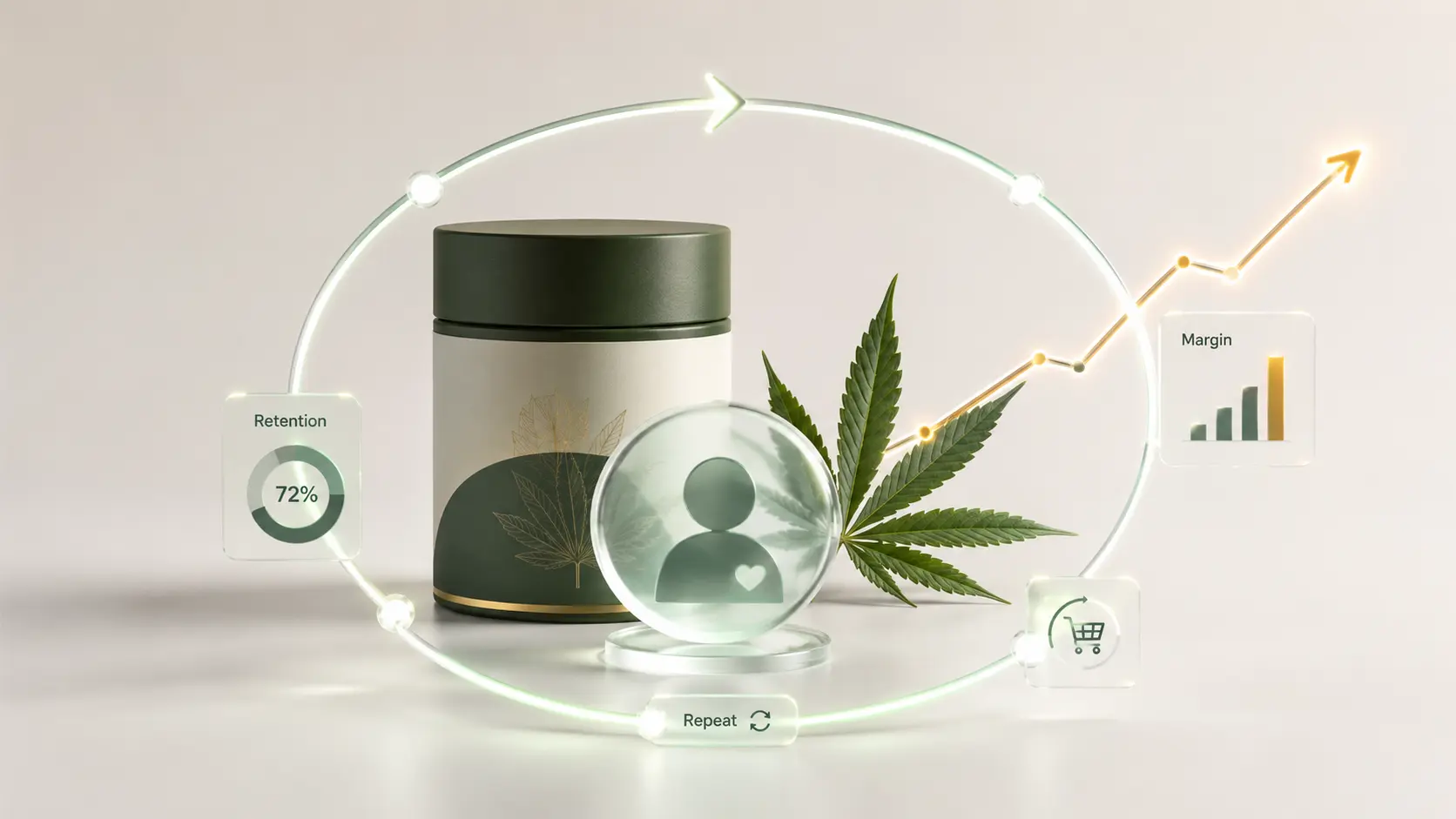
In cannabis, acquisition costs are rising, brand loyalty is low, and shoppers switch on price. The customers you already have are the ones quietly deciding whether you're profitable. Cannabis customer retention is where the margin lives and the operators who measure and defend retention rigorously are the ones who survive margin compression. This guide covers what cannabis customer retention is, the metrics that actually matter, the tactics that move the numbers, and how to measure what your marketing actually caused.
What Is Customer Retention?
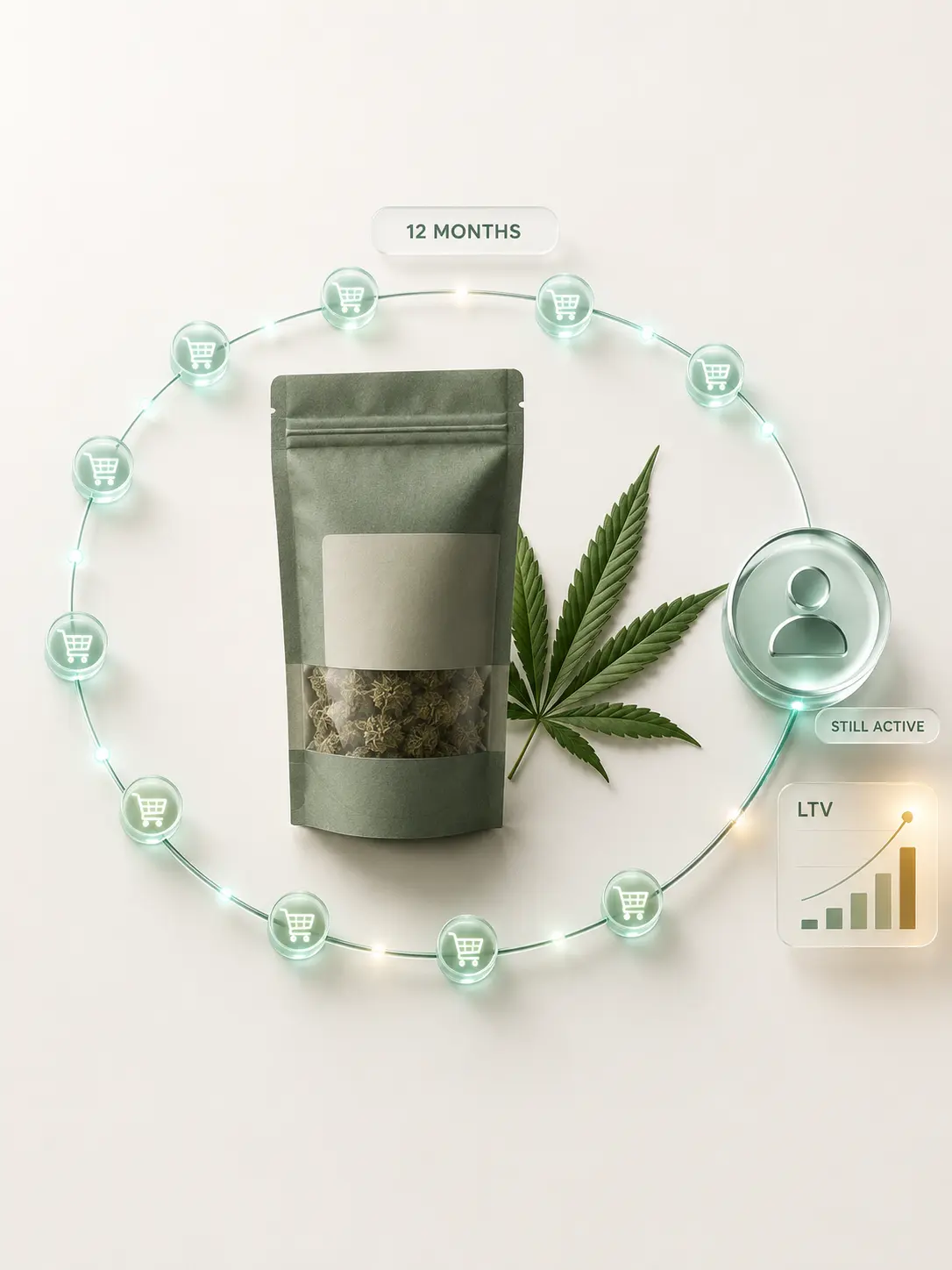
Customer retention is the practice of keeping customers transacting with your dispensary or brand over time and the discipline of measuring how well you're doing it. At its simplest, it answers a single question: of the customers you had a year ago, how many are still buying from you today, and how much are they worth?
Retention sits opposite acquisition on the revenue ledger. Acquisition wins new customers; retention keeps the ones you have. Most cannabis marketing budgets are tilted toward acquisition which makes sense when you're growing, but breaks down in mature markets where the cost of winning a new customer is higher than the lifetime value they'll deliver. Retention is the lever that fixes that.
The Retention Metrics That Matter
Different metrics answer different questions. The strongest cannabis operators track several together to get a complete picture. For the full breakdown, see Customer Retention Metrics for Cannabis Operators.
The short list
Customer Retention Rate (CRR)
The percentage of customers from a starting period who are still customers at the end. Foundational. A 70% CRR means seven of every ten customers from the start of the period stayed.
Customer Churn Rate
The inverse of CRR the percentage of customers who stopped buying. The two always sum to 100%. See Customer Churn Rate for the formula and cannabis-specific benchmarks.
Repeat Purchase Rate
The percentage of customers who made more than one purchase in a given period. Critical for dispensary retail a single purchase doesn't make a profitable customer when you discounted 25–40% to win them.
Customer Lifetime Value (CLV)
Total revenue you can expect from a customer across the relationship. CLV sets the ceiling on acquisition spend and the case for retention investment. See How to Forecast Customer Lifetime Value.
Net Revenue Retention (NRR)
How much revenue you keep from an existing customer cohort over time, accounting for expansion, contraction, and churn. NRR above 100% means existing customers are growing your business without new acquisition. See Net Revenue Retention for Cannabis Operators.
Customer Retention Cost
The total cost of retention programs divided by retained customers. Pair with CLV to know whether retention spend is profitable. See Customer Retention Cost Formula.
Retention Lift
The difference in repeat-purchase behavior between customers exposed to your retention marketing and a matched control group. The only metric that tells you how much of your retention rate is actually caused by your advertising. See How to Measure Customer Retention Lift.
Loyalty: The Most Actionable Retention Tactic
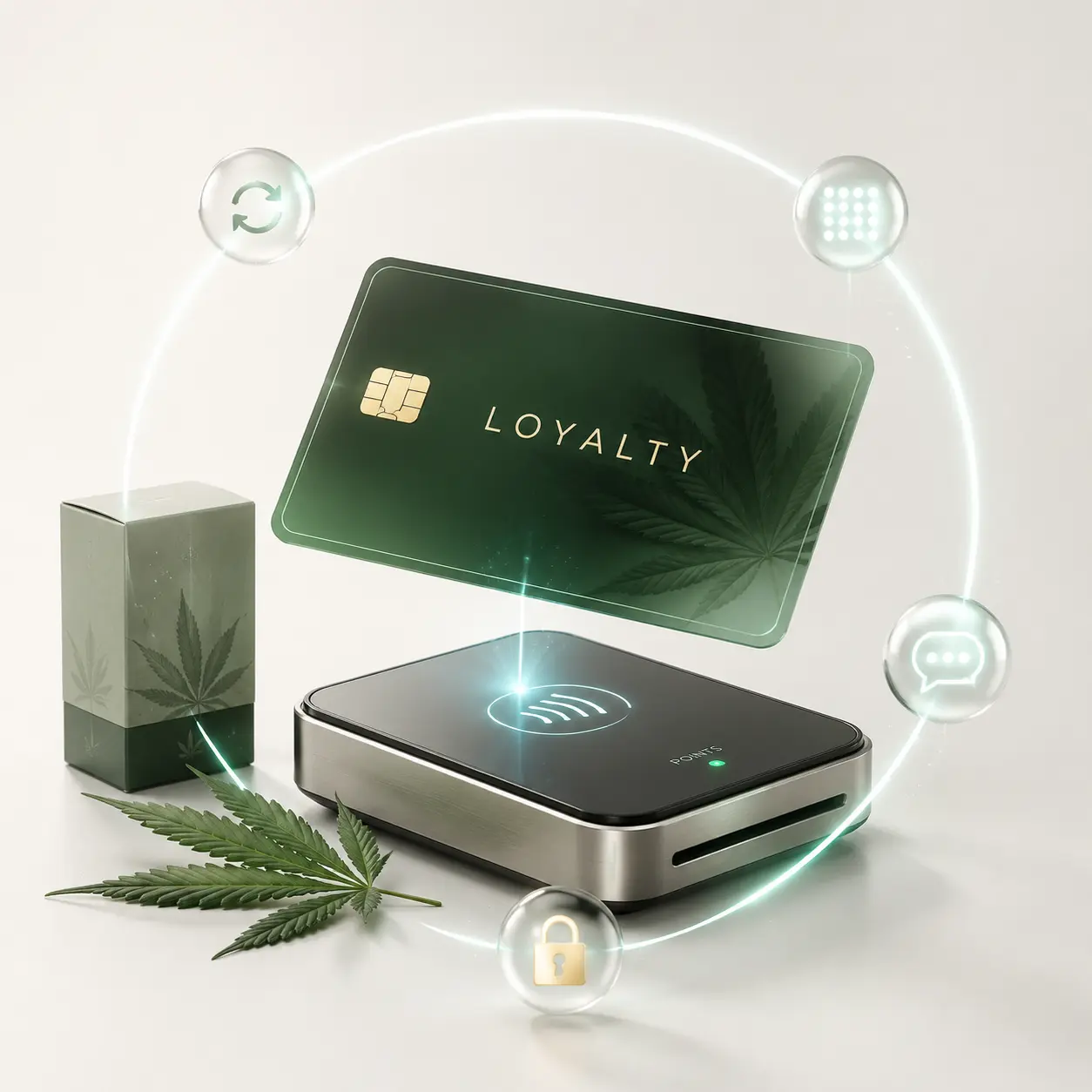
If you're going to invest in one retention tactic first, make it a loyalty program. Loyalty programs are the highest-leverage retention play available to most cannabis operators because they do four things no other tactic does as cleanly: they incentivize repeat behavior at the point of purchase, capture first-party data the rest of your marketing depends on, build a compliant direct-communication channel via SMS and email, and create switching costs in a market where shoppers otherwise switch on price.
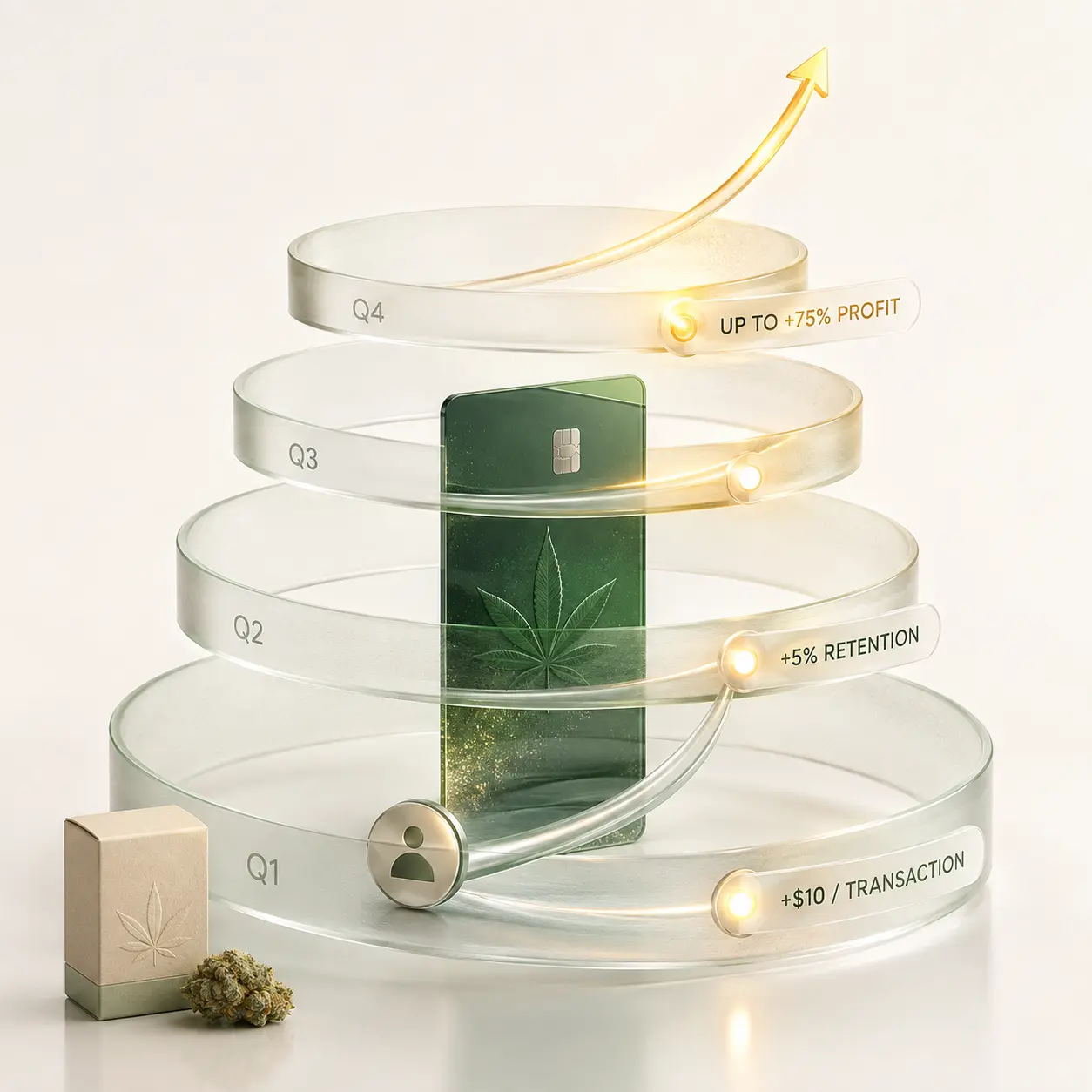
Loyalty also produces measurable retention lift on its own. Operators with mature loyalty programs typically see retained customers spend 10+ dollars more per transaction than casual shoppers, and a 5% increase in retention can lift profitability by up to 75%. That math compounds every quarter your loyalty program runs well, the customer base it produces becomes more valuable than the one before it.

The tactical playbook program types, real cannabis examples, promotion, compliance, software, and full-funnel integration lives in our Cannabis Loyalty Program Playbook. This hub keeps you in the strategic and measurement layer; the loyalty playbook is where you go to actually build the program.
Reporting vs. Measuring Retention
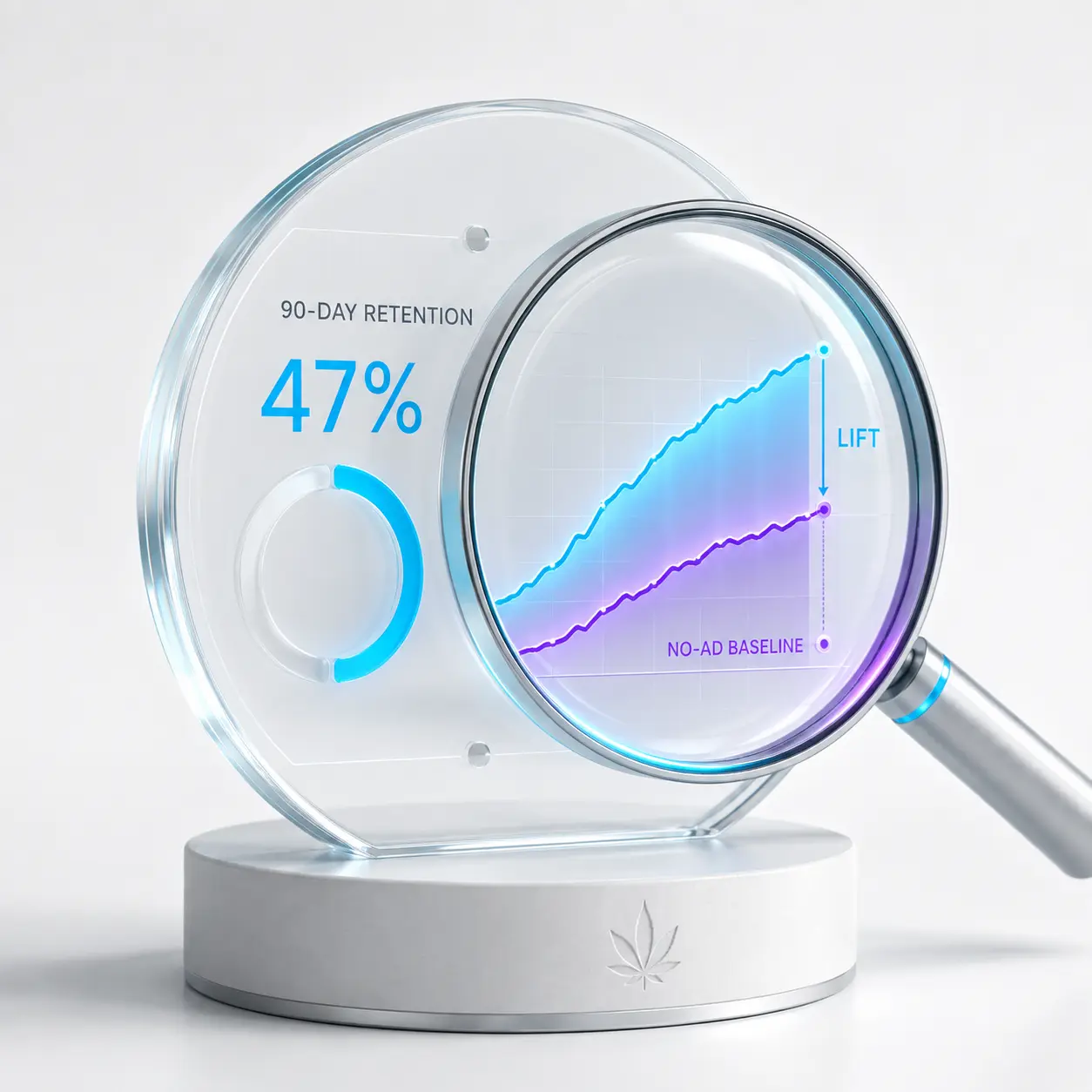
Most operators report retention. Few measure it correctly. The difference matters.
Reporting retention means tallying who came back. "Our 90-day retention rate is 47%." True, but uninformative. It doesn't tell you whether your retention spend is working, whether you can grow that 47%, or what you'd lose if you stopped advertising to existing customers.
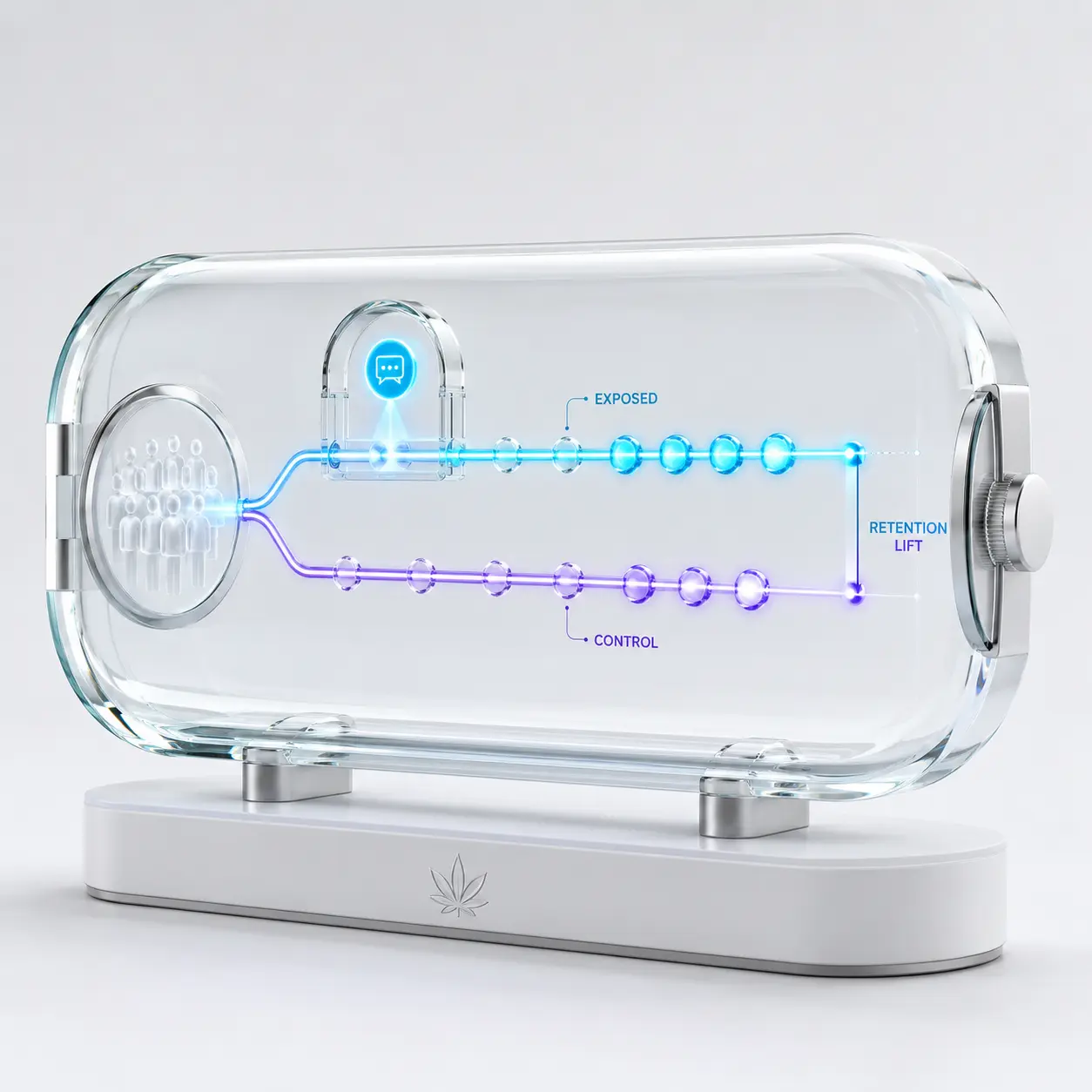
Measuring retention means isolating cause from effect running an exposed group against a matched control group and watching the difference. That difference is retention lift. The methodology underneath it is incrementality: the same exposed-vs-control framework used to measure ad lift, applied to repeat-purchase behavior. Operators who only report retention are guessing whether their retention spend works. Operators who measure it know.
Why Cannabis Retention Is Different
Three structural realities change how retention plays out in cannabis.
First, low baseline loyalty
Cannabis shoppers switch dispensaries on price and convenience more than most retail categories. That makes the baseline retention rate lower than peer industries and makes retention spend (especially loyalty) more decisive in the margin equation.
Second, POS data fragmentation
Cannabis retail runs on industry-specific point-of-sale systems (Dutchie, Jane, Treez) rather than mainstream ecommerce. Repeat-purchase behavior has to be read from those systems natively or it doesn't show up at all.
Third, restricted retention channels
Major email and SMS platforms restrict cannabis use, so retention marketing leans more heavily on owned channels which is exactly why loyalty programs (with their owned SMS and email opt-in lists) carry more weight in cannabis than they do in peer industries.
From Metrics to Defended Revenue
Retention metrics are only useful if they change what you do. Four concrete moves operators make once they're measuring correctly
If you don't have one, this is the highest-ROI retention investment available — see the Cannabis Loyalty Program Playbook.
Once you can quantify revenue defended by retention spend, the case for moving budget from acquisition to retention writes itself see Customer Acquisition vs. Retention.
A 30% discount that wins a first visit and a lapsed customer is a margin loss, not a marketing win. CLV and retention rate together tell you which acquisition was actually profitable.
Your top retention spend should go to your top-value cohort. Customer-level analytics is what makes that targeting possible see Customer Analytics for Cannabis Retail.
How Retention Sits Inside the Bigger Measurement Picture
Retention doesn't stand alone. It works alongside marketing attribution (what your advertising caused) and retail analytics (what's happening in your retail business). The three hubs answer different questions but inform each other:

- Attribution tells you which campaigns drove revenue.
- Retail analytics tells you which customers and segments are driving the business.
- Retention tells you whether you're keeping them and how much your marketing is defending.
Halo lift and ROAS both have retention components: a campaign that wins a first sale but loses the customer isn't really profitable. See The Halo Effect in Marketing and How to Measure Cannabis ROAS for how retention reshapes those numbers.
Key Takeaways
- Retention is where margin lives in mature cannabis markets acquisition alone can't sustain profitability.
- Track CRR, churn, repeat purchase rate, CLV, NRR, retention cost, and retention lift together. Each answers a different question.
- Loyalty programs are the highest-leverage retention tactic direct communication, first-party data, switching costs, measurable lift.
- Reporting retention isn't measuring it. Measuring requires a control group.
- Cannabis retention runs on different rails: industry POS systems, restricted channels, low baseline loyalty.
Featured Spokes
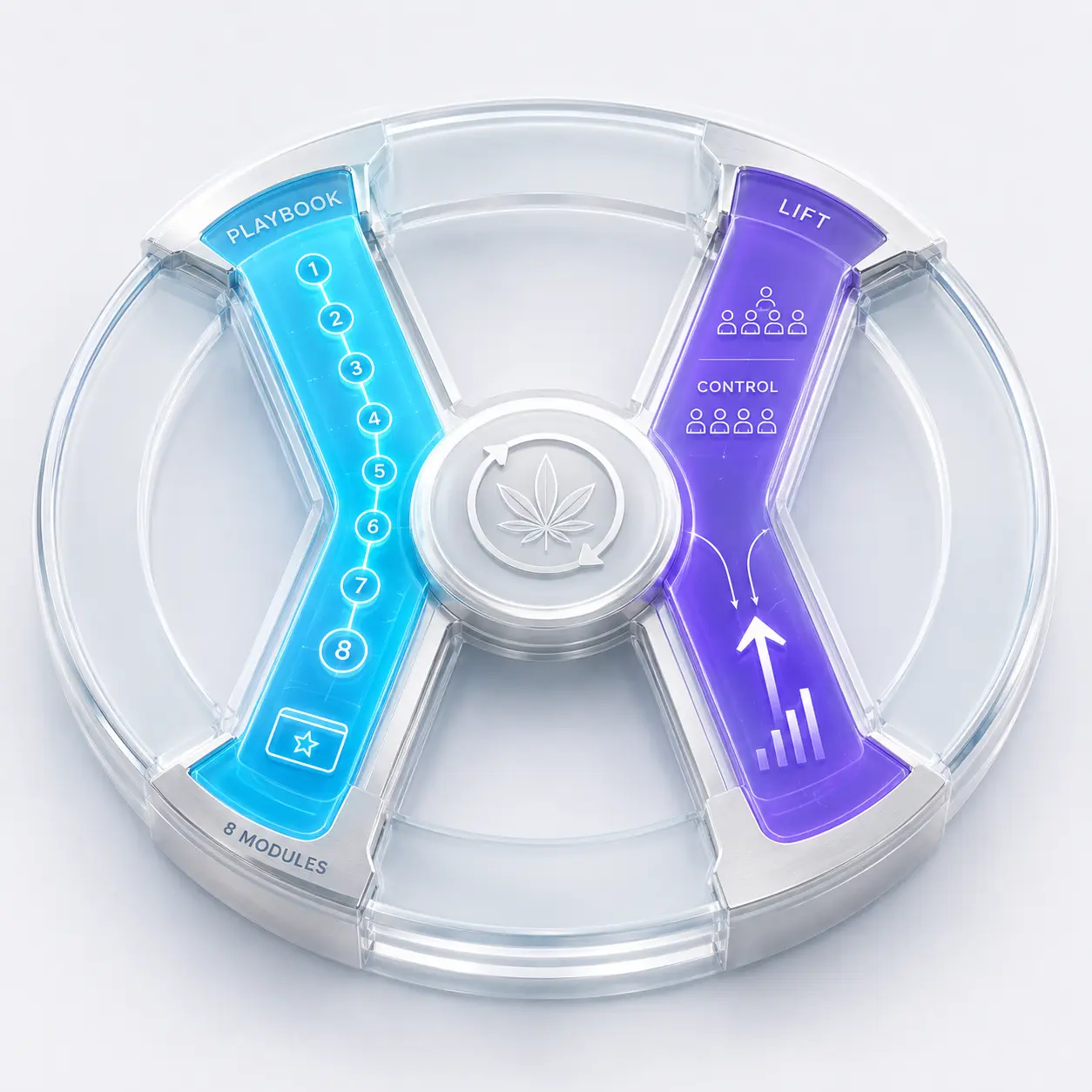
Two pieces to start with the tactical playbook and the measurement methodology:
- Cannabis Loyalty Program Playbook the tactical course on building, promoting, and integrating a loyalty program. 8 modules, intermediate level.
- How to Measure Customer Retention Lift the measurement methodology behind every retention claim. Control groups, lift formula, where the standard framework falls short in cannabis.
Keep Learning

Sister hubs for the complete picture
- Marketing Attribution for Cannabis what your advertising actually caused
- Retail Analytics the layer underneath retention metrics
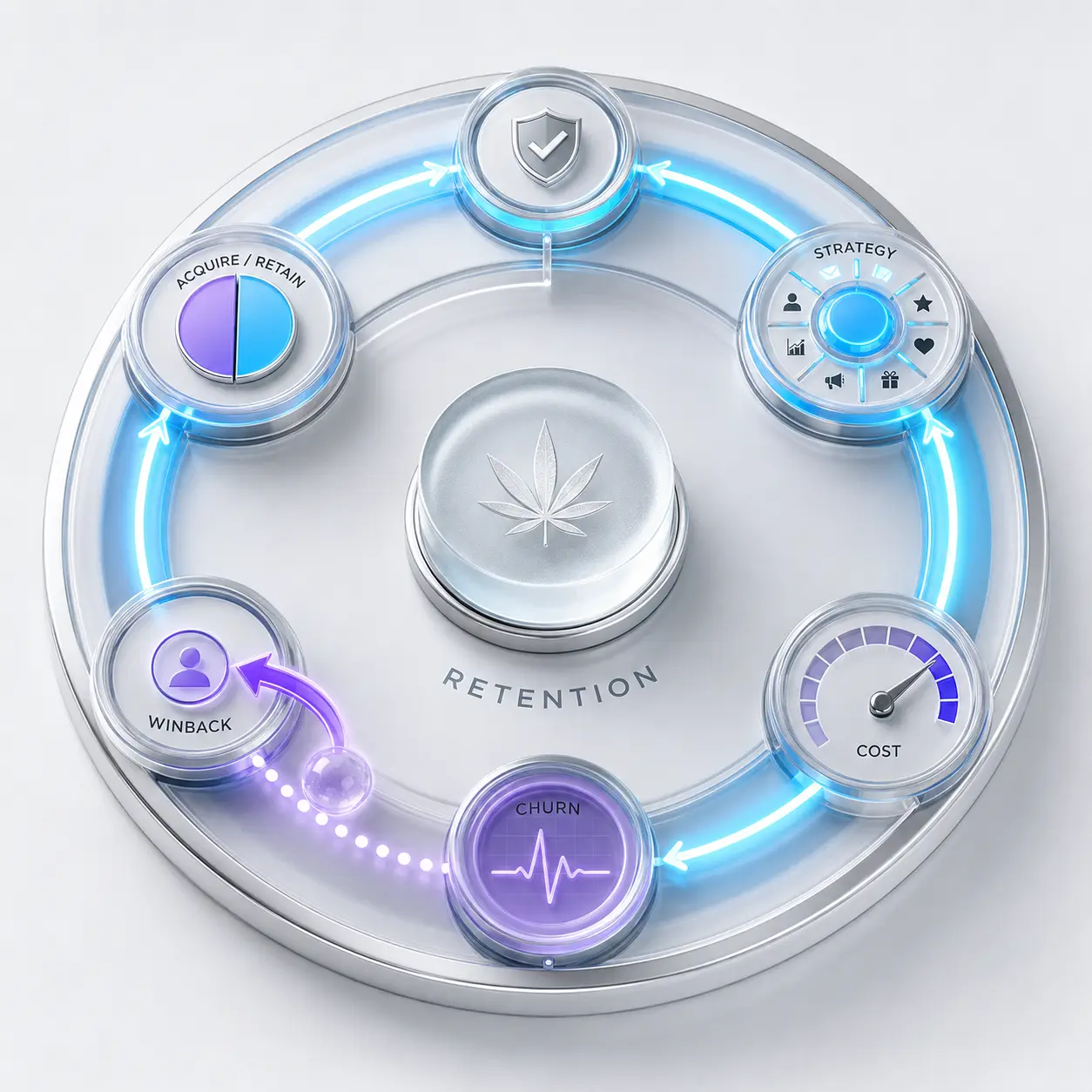
Specific retention topics
- Customer Churn Rate calculation, benchmarks, and early-warning signals
- Customer Retention Cost Formula what you're spending per retained customer
- Customer Retention Strategy for Cannabis seven tactics that move the metrics
- Cannabis Customer Winback Campaigns reactivating lapsed buyers
- Customer Acquisition vs. Retention where your next marketing dollar belongs
- What Is Customer Retention? clear definition for operators
Want to see retention measured against your own POS data?
The strategies and insights shared in this course are based on MediaJel’s extensive experience in cannabis marketing and programmatic advertising. Results may vary based on individual implementation, market conditions, and compliance requirements.

.jpg)

expand & engage retain & grow
From a dispensary launching in a local market to an established brand seeking to expand worldwide, programmatic can fuel your growth.
MediaJel is the industry’s digital marketing platform of choice for grow-focused brands and retailers like you.
Ready to accelerate?